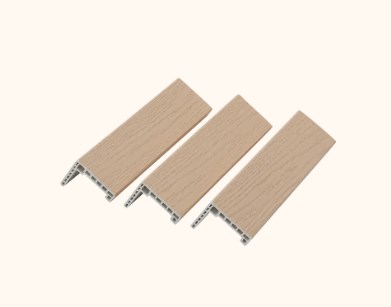
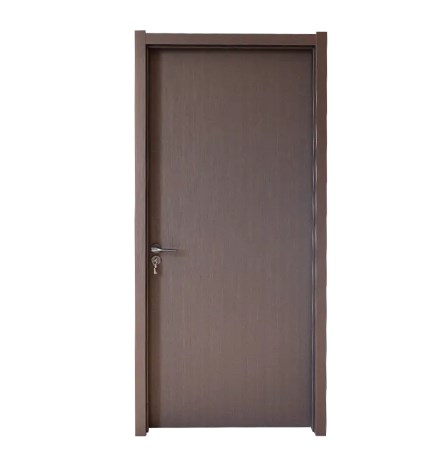
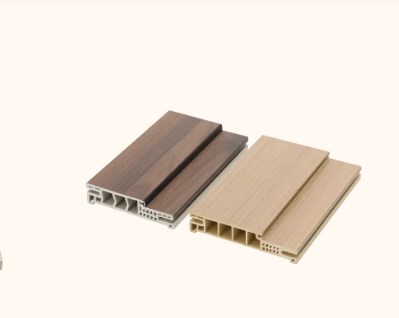
In a 12-story hotel renovation in Manila, contractors removed 2,300 square meters of gypsum partition walls after two typhoon seasons left the boards swollen, stained, and odorous. The replacement material was UPVC partition board supplied factory-direct by Jiangyin Gwing Technology Co., Ltd. The new walls went up in eleven fewer working days and required no joint compound, no plastering, and no repainting. That is the practical impact of choosing the right PVC partition board for a moisture-driven specification.
A PVC partition board is a rigid, foam-structured wall panel made from unplasticized polyvinyl chloride resin, calcium carbonate, and processing aids. When the product is labeled UPVC, it means the formulation excludes plasticizers that would soften the sheet and reduce its dimensional stability. That distinction is not cosmetic. Soft PVC sheets sag under load, warp near heat sources, and off-gas more readily; UPVC does not.
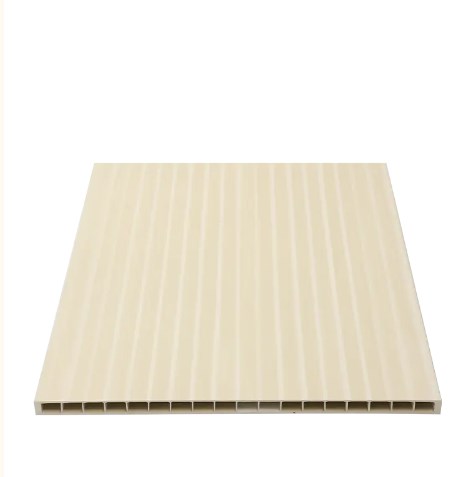
Serious manufacturers extrude UPVC partition boards with a free-foam or Celuka structure, which creates a solid outer skin and a microcellular core. The result is plywood-like stiffness at roughly half the weight. A 10 mm panel weighs about 5.2 kg per square meter, cuts with a standard circular saw, and absorbs less than 0.5% water by weight after 24 hours of immersion. Gypsum board, in comparison, typically absorbs 25-30% under the same test. That single number drives the rest of the material selection.
In specification terms, a UPVC partition board is a rigid, foam-structured sheet produced from unplasticized polyvinyl chloride resin, calcium carbonate filler, and stabilizing agents through an extrusion process. It is waterproof, corrosion-resistant, and machinable with standard woodworking tools.
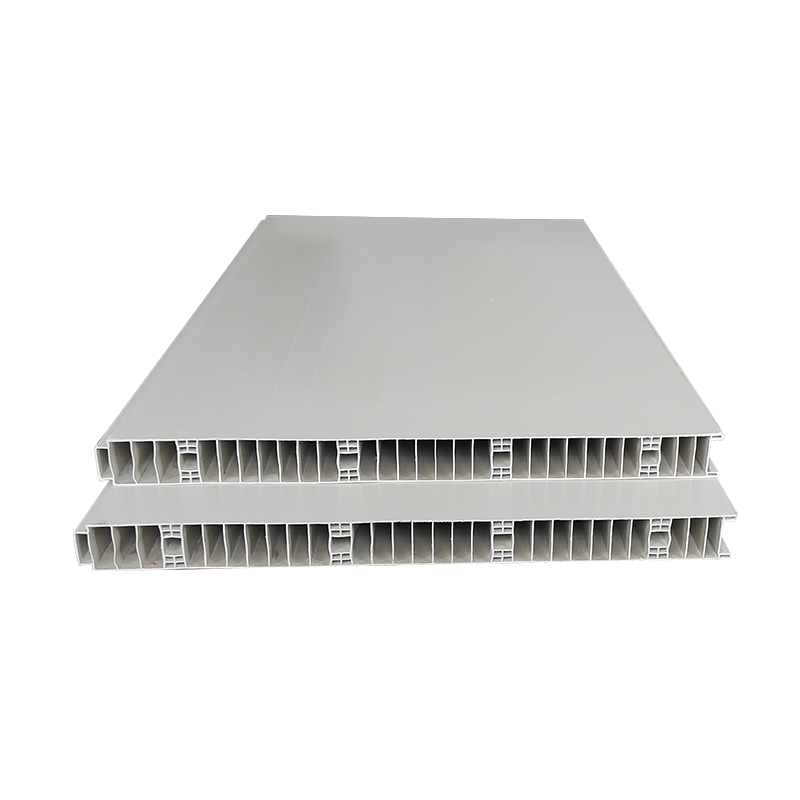 UPVC Partition Board for Moisture-Resistant Interior WallsThis foam-structured UPVC partition board offers waterproof, corrosion-resistant properties and quick installation. It suits high-humidity spaces like kitchens and bathrooms, and its smooth surface simplifies maintenance, making it a practical choice for space separation.View Product →
The fastest way to compare wall materials is to place them side by side on the properties that cause field failures: water absorption, impact resistance, weight, installation speed, repair difficulty, and lifecycle maintenance. UPVC partition boards win on moisture resistance and installation speed, tie on flatness consistency, and lose only in high-temperature fire ratings and very high-end surface expectations.
| Property | UPVC Partition Board | Gypsum Board | Ceramic Tile on Blockwork | Treated Timber |
| Water resistance | Excellent, absorption under 1% | Poor, 25-30% absorption | Excellent, grout is the weak point | Moderate, needs sealing |
| Impact resistance | Good, foam core absorbs shock | Poor, dents and cracks easily | Excellent but brittle | Good |
| Weight at 10-12 mm (kg/m2) | 5-7 | 8-12 | 18-25 | 8-15 |
| Installation time per 100 m2 | 2.5-3 days | 4-5 days | 7-9 days | 3-4 days |
| Repairability | Moderate, melt-repair is possible | Easy, joint compound and tape | Difficult, remove and re-tile | Moderate, sand and refinish |
| Lifecycle maintenance | Low, wipe clean | High, repaint and patch | Moderate, re-grout | High, refinish and re-seal |
Installation time per 100 m2 of partition wall, two-person crew
The installation gap is where the economics shift. A two-person crew can set up 100 m2 of framed UPVC partition in three working days, including cutting around doors, conduits, and mechanical penetrations. The same area in hollow brick with ceramic tile ran nine days in the Manila project mentioned above, and the labor cost difference was about USD 2,300. For a broader look at long-term moisture performance, our detailed review of PVC partition board benefits covers the humidity test data behind these numbers.
UPVC Partition Board for Moisture-Resistant Interior WallsThis foam-structured UPVC partition board offers waterproof, corrosion-resistant properties and quick installation. It suits high-humidity spaces like kitchens and bathrooms, and its smooth surface simplifies maintenance, making it a practical choice for space separation.View Product →PVC partition boards are specified most often in wet zones, healthcare interiors, hotel renovations, factory enclosures, and demountable office partitions. Each of these environments exposes gypsum and timber to failure modes that UPVC simply does not have.
What ties these five scenarios together is the absence of wet trades. No plaster, no tile adhesive, no joint compound. A UPVC partition wall is a dry, mechanical assembly, so the schedule no longer depends on curing time or drying weather.
The most reliable installation sequence for UPVC partition board is: measure and plot, cut panels, erect the frame, screw the boards, cap the joints, then clean. Each step must be completed before the next row of work begins.
Measure the floor module and mark centerlines for the frame at 600 mm spacing.
Cut panels with a circular saw or panel router using a carbide-tipped blade; support the sheet to prevent chipping at the exit edge.
Fix the frame using UPVC square pipe or galvanized steel studs; check plumb with a laser level before fixing the first panel.
Screw panels to the frame with self-tapping screws at 300 mm spacing; set screw heads flush with the surface without over-torquing.
Cap vertical joints with PVC trim strips for a clean shadow gap, or finish butt joints with compatible PVC cement.
Wipe the surface down and protect exposed edges with corner guards until handover.
Contractors routinely ask whether adhesive mounting is acceptable. It is, for lightweight boards on flat existing walls, but screw-fixed framing is the safer choice for ceiling-height partitions because the panel must not depend on a glue line for lateral stability. If the wall will support shelves, mirrors, or handrails, plan the frame layout on paper before cutting any board.
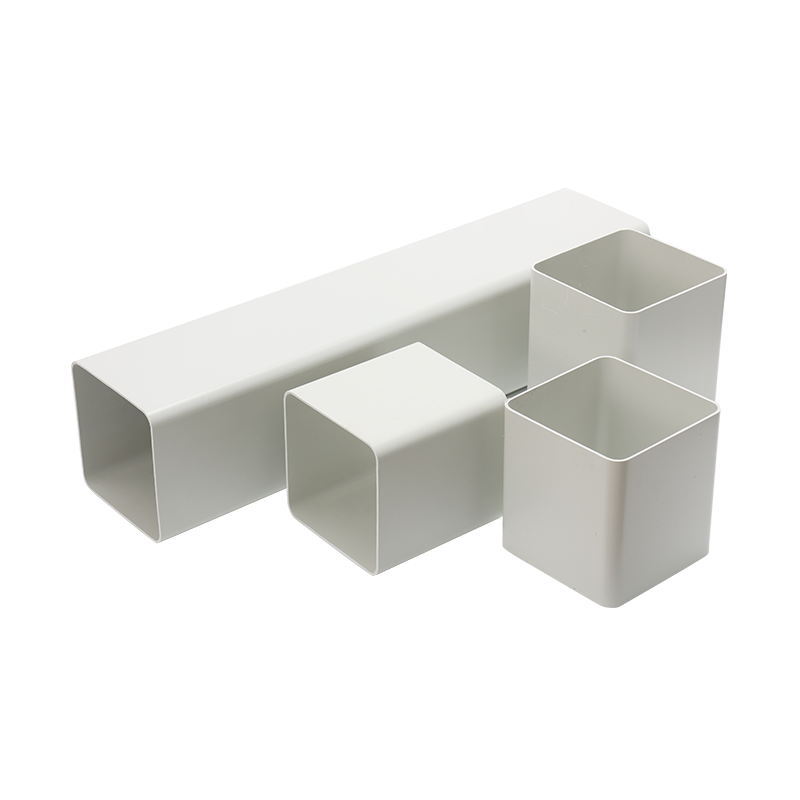 UPVC Square Pipe for Corrosion-Resistant Framing SupportDesigned for partition framing, this UPVC square pipe provides strong corrosion resistance, electrical insulation, and light weight. It supports stable installation and long-term aging resistance, making it a reliable structural component for wall assemblies.View Product →
Most procurement errors come down to four mismatches: density, fire rating, color lot, and edge condition. Each one turns into a site-level problem that the purchase order cannot fix retroactively.
For a standard 1220 x 2440 mm, 10 mm white UPVC partition board, a realistic factory price in 2026 ranges from USD 3.8 to USD 6.2 per sheet, depending on density, flame-retardant additives, and surface finish. Panels below USD 3.5 almost always carry a density trade-off that changes screw-holding performance.
Getting an accurate quote works better from a drawing than from a generic price list. Send the panel sizes, opening layout, and fire-rating requirement through the contact page; the quote will include packing and loading terms.
For orders above 300 to 500 sheets, the most cost-effective route is usually a factory-direct custom batch, because the manufacturer can adjust panel size, surface film, and edge finish without involving a trading intermediary. This route also removes the two most common causes of onsite waste: mismatched surface texture across batches and panels cut to the wrong module.
When the manufacturer controls extrusion, cutting, and machining in one plant, dimensional tolerances can hold within +/-0.3 mm on width and +/-0.5 mm on length. That consistency is the difference between a wall assembly that goes together quickly and one that demands shims on every frame.
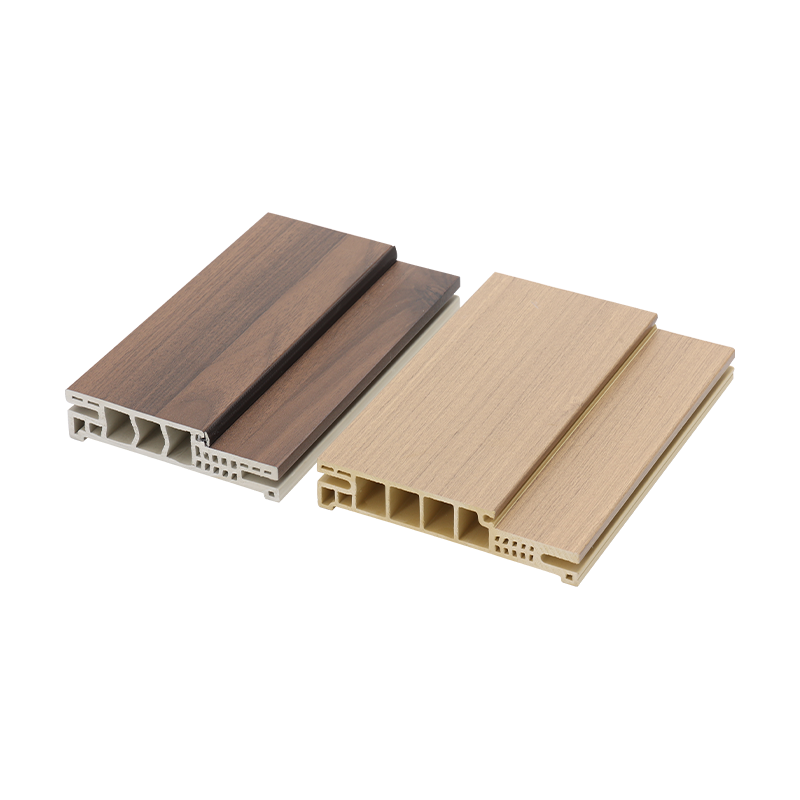 Customized UPVC Products for Tailored Wall SolutionsWhen standard sizes or specific performance grades are required, customized UPVC products from a manufacturer with integrated extrusion and machining can meet precise tolerances and application needs, ensuring better fit and reduced site adjustments.View Product →
UPVC partition board absorbs less than 0.5% water by weight after 24 hours of immersion. Cut edges do not swell, and the surface can be wiped clean without sealing. For continuous immersion applications, such as shower enclosures, specify a closed-cell grade with welded joints.
Yes, but adhesion depends on surface preparation. The smooth foam surface needs scuffing and a primer designed for PVC before applying water-based paint or wallpaper paste. Factory-laminated films are the better long-term choice because they do not peel at the edges.
For standard room-height partitions under 3 m, 10 mm boards on a 600 mm frame are the most common specification. Use 12 mm for walls that will carry shelves or heavier door frames, and 18 mm for industrial enclosures or walls above 3.2 m. The 8 mm grade is best limited to ceiling panels and decorative cladding.
Standard UPVC is naturally self-extinguishing, meaning it stops burning when the ignition source is removed. Flame-retardant grades add smoke and heat-release performance verified by laboratory tests. For exit corridors and public buildings, ask the supplier for the specific fire test report before ordering.

 English

 English
 عربى
عربى Español