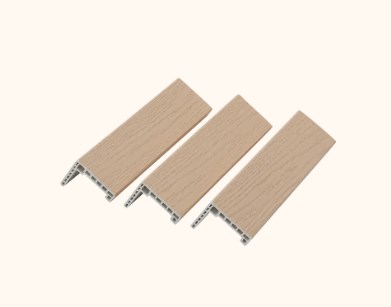
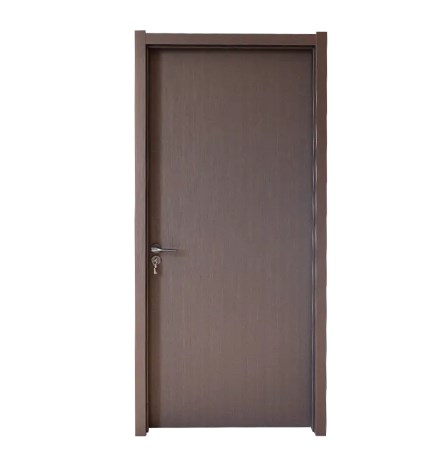
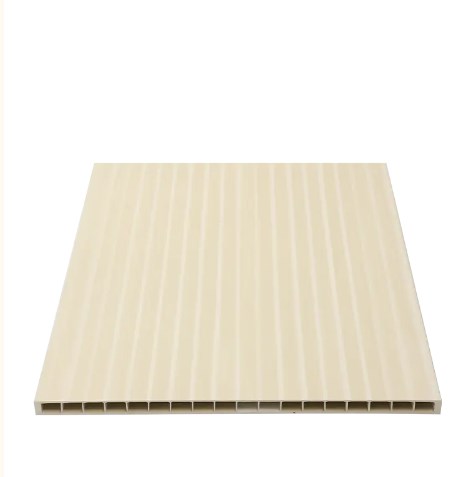
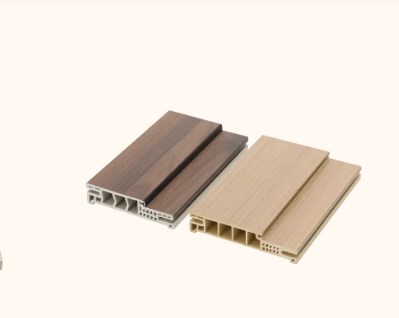
In modern architecture and home renovation, the choice of materials not only determines the aesthetics of the project but also directly impacts its lifespan and maintenance costs. UPVC boards, due to their excellent physical properties and chemical stability, have become an important material in construction, decoration, and industrial applications.
The core component of UPVC boards is polyvinyl chloride, forming a hard, stable board after the removal of plasticizers. Compared to traditional wood, metal, or composite boards, UPVC boards offer multiple advantages in terms of physical and chemical properties. They possess excellent corrosion resistance and acid and alkali resistance, and are not prone to rot, cracking, or deformation even with long-term use in humid or chemical environments. UPVC boards have extremely strong weather resistance, resisting the erosion of ultraviolet rays and climate changes on the surface, ensuring that the color and structure remain stable during long-term indoor and outdoor use. Their smooth surface and uniform density provide good sound insulation and thermal insulation effects, which is particularly important in building exterior wall decoration, door and window profiles, and interior partitions.
From an environmental perspective, UPVC boards also show significant advantages. Because they do not contain plasticizers, they do not release harmful gases during use, and the material is recyclable, conforming to the sustainable development concept of modern green buildings. This makes UPVC boards suitable not only for residential renovation but also widely used in public facilities, commercial spaces, and medical and laboratory environments.
UPVC boards are widely used in the construction industry, covering various aspects such as door and window systems, exterior wall cladding, roof coverings, interior partitions, and waterproof structures. Their lightweight, high strength, and durability allow them to replace some traditional materials in structural design, achieving a double improvement in construction efficiency and safety. Especially in exterior wall and door and window systems, UPVC boards can provide excellent thermal insulation and sealing performance, reducing energy consumption and improving the overall comfort of the building.
UPVC boards have good processing adaptability and can be formed into various structural shapes through cutting, welding, and hot bending processes. Whether for large-area panel covering or fine profile processing, UPVC boards can maintain stable mechanical properties and a beautiful surface finish. Its impact resistance and aging resistance also ensure that the building facade maintains its integrity and aesthetics even after long-term use, reducing maintenance frequency and costs.
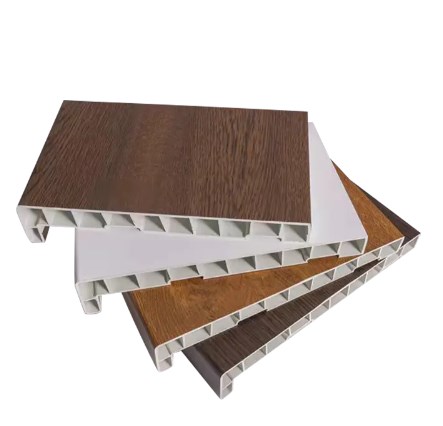
The manufacturing of high-performance UPVC panels relies on advanced processing technologies. During the panel molding process, temperature and pressure are strictly controlled to ensure a uniform arrangement of molecular chain structures, thereby improving the mechanical strength and impact resistance of the panels. In subsequent surface treatment steps, coating, spraying, or composite film technologies are often used to further enhance the weather resistance, stain resistance, and aesthetics of the panels. Some high-end UPVC panels can also achieve customized processing with multiple colors and textures to meet the personalized needs of architectural design.
In terms of connection and installation, UPVC panels are compatible with various fixing methods, including screw fixing, welding, and embedded connections. Their excellent dimensional stability ensures that the panels do not deform significantly after installation, while the lightweight nature of the panels reduces the difficulty of transportation and construction. In practical engineering, this means that UPVC panels can not only improve construction efficiency but also reduce labor and equipment costs.
Compared with traditional building materials, UPVC panels have significant advantages in terms of use and maintenance. First, their surface is smooth and stain-resistant; daily cleaning only requires wiping with water or a neutral detergent, without the need for special maintenance. Secondly, UPVC panels have excellent corrosion resistance, acid and alkali resistance, UV resistance, and waterproofing properties. Even when exposed to outdoor environments for a long time, they are not prone to fading, aging, or cracking. This not only extends the service life but also reduces maintenance costs.
At the same time, UPVC panels have stable fire resistance, are non-combustible or self-extinguishing, which helps to improve the overall safety of the building. In architectural design, choosing UPVC panels can meet fire safety standards and environmental protection requirements, making them an ideal material choice for high-performance buildings.
With the increasing awareness of environmental protection, green building materials have become a focus of the industry. UPVC panels comply with multiple environmental standards; their raw materials are recyclable, reducing resource waste. Furthermore, UPVC panels do not release harmful substances during production and use, having minimal impact on air quality and human health. Its low energy consumption, durability, and recyclability make it significantly environmentally friendly throughout its entire lifecycle. For construction projects pursuing sustainable development, UPVC panels not only meet functional requirements but also align with ecological and environmental protection principles.
| Q1: Are UPVC panels suitable for both indoor and outdoor use? | A1: UPVC panels have excellent weather resistance and UV resistance, making them suitable for various indoor and outdoor environments, including exterior walls, doors and windows, partitions, and roof coverings. |
| Q2: Are UPVC panels environmentally friendly? | A2: Yes, UPVC panels do not contain plasticizers, are recyclable, and do not release harmful gases during use, meeting green building standards. |
| Q3: Do UPVC panels require special maintenance? | A3: Routine maintenance is very simple; just wipe with water or a neutral detergent. No additional maintenance is required. |
| Q4: Can UPVC panels be processed into various shapes? | A4: Yes, UPVC panels support various processing methods such as cutting, welding, and heat bending, meeting the diverse needs of architectural and decorative design. |
| Q5: How long is the service life of UPVC panels? | A5: Under normal use conditions, UPVC panels have long-term durability. Their anti-aging, corrosion resistance, and UV resistance ensure a service life of several decades. |

 English

 English
 عربى
عربى Español