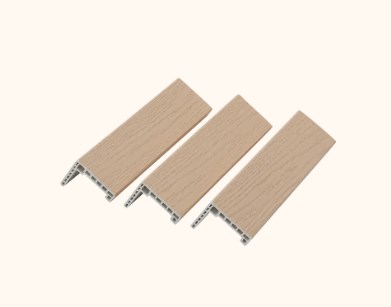
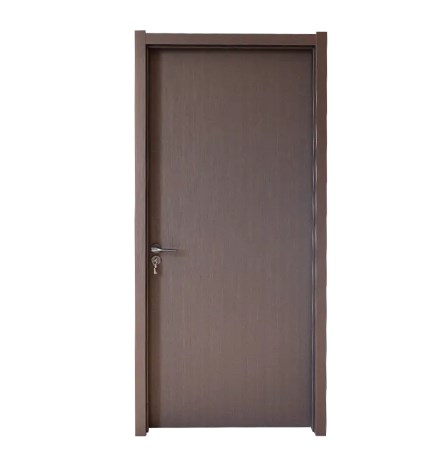
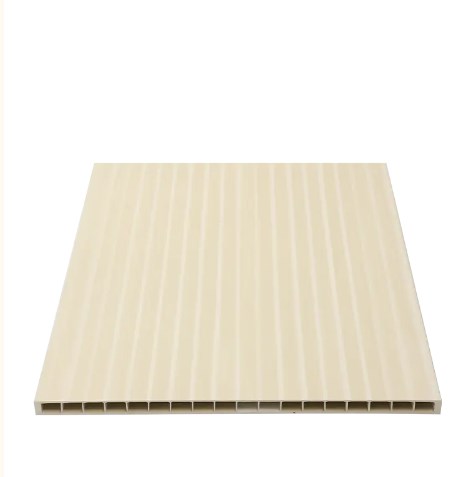
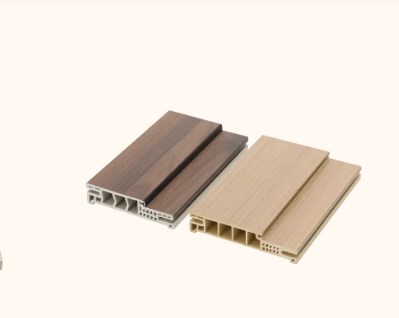
In the modern construction industry, the selection of decorative materials increasingly emphasizes environmental friendliness, durability, and aesthetics. WPC (Wood Plastic Composite), as a new type of environmentally friendly building material, has received widespread attention in recent years, especially in exterior wall decoration, floor paving, and landscaping, becoming the first choice for many designers and construction companies. Its unique advantages allow WPC material to not only possess the natural beauty of wood but also overcome the shortcomings of traditional wood, making it an ideal choice for modern architecture and home decoration.
WPC decoration material is a new type of material composed of wood fibers and plastics (usually polyethylene or polypropylene) through a special process. The wood fibers provide WPC material with the appearance and texture of natural wood, while the plastics give it excellent waterproof, corrosion-resistant, and anti-aging properties. The composite characteristics of WPC material allow it to satisfy the decorative effect of wood while overcoming the weaknesses of wood in the external environment.
WPC decoration material has excellent weather resistance and can be used for a long time under various climatic conditions. Compared to traditional wood, WPC material offers superior UV resistance and will not exhibit discoloration, cracking, or rot like wood, even under prolonged sun exposure. For building facades and landscaping frequently exposed to rain, moisture, or damp environments, WPC provides longer-lasting protection.
Environmental friendliness is another major highlight of WPC. Made from recycled wood and plastic, it reduces the demand on natural resources and effectively minimizes plastic waste, aligning with modern sustainable development principles. The manufacturing process of WPC is also relatively environmentally friendly, requiring minimal use of chemical solvents, thus minimizing environmental pollution. WPC is recyclable and can be reused after its lifespan, reducing resource waste.
WPC possesses excellent physical properties, including UV resistance, anti-aging properties, and resistance to compression, tension, and bending. Its strength and toughness allow it to maintain good performance even in complex construction environments. Furthermore, the specially treated surface of WPC offers some stain resistance, simplifying daily maintenance.
WPC material closely resembles natural wood in appearance, retaining its texture and color, but is more uniform and stable. This makes WPC decorative materials highly flexible in design applications, adaptable to various architectural styles, whether modern minimalist, traditional classical, or natural pastoral. Whether on building facades, interior walls, floors, or in landscaping, WPC materials offer richer design expression.
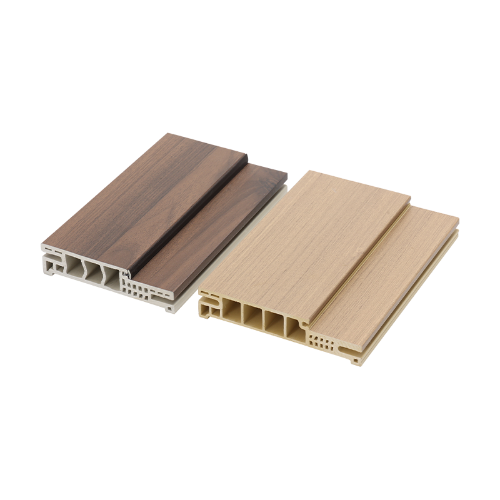
WPC decorative materials not only excel in physical properties, but their ease of installation and maintenance is also a major attraction for users. WPC materials are typically modular, allowing for cutting and splicing according to actual needs during construction, eliminating the need for complex tools or cumbersome procedures. Furthermore, the smooth surface of WPC materials does not easily accumulate dust, making cleaning very convenient and reducing daily maintenance costs. Compared to traditional wood, WPC materials do not require regular painting or anti-corrosion treatment, reducing maintenance difficulty and costs.
WPC decorative materials, due to their excellent performance, are widely used in various fields such as construction, landscaping, and home furnishing. In the construction industry, WPC materials are mainly used for exterior wall decoration, balcony railings, fences, and exterior ground paving. In landscaping, WPC materials are widely used in the construction of landscape walkways, benches, pavilions, and other facilities, providing a unique effect that blends nature and modernity. Due to its excellent water resistance and mildew resistance, WPC materials are also suitable for outdoor environments, especially in humid areas, effectively preventing wood rot.
Yes, WPC decorative materials have excellent weather resistance and can maintain good performance under various climatic conditions. It effectively resists ultraviolet rays, moisture, and corrosion, making it very suitable for long-term exposure to outdoor environments.
WPC material is an environmentally friendly material, made from recycled wood and plastic, in line with the concept of sustainable development. Its production process is relatively environmentally friendly and it can be recycled.
WPC decorative material features a modular design, making construction convenient and quick. No complicated tools or professional skills are required; even non-professionals can install it.
WPC decorative material is very easy to maintain. Daily cleaning only requires water and a neutral detergent, and there is no need for regular painting or anti-corrosion treatment, saving significant maintenance costs.

 English

 English
 عربى
عربى Español