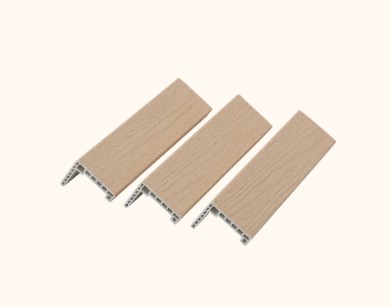
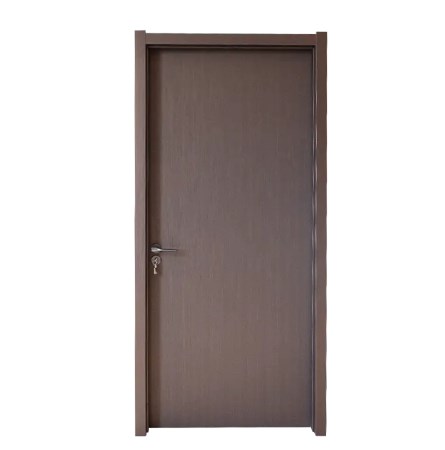
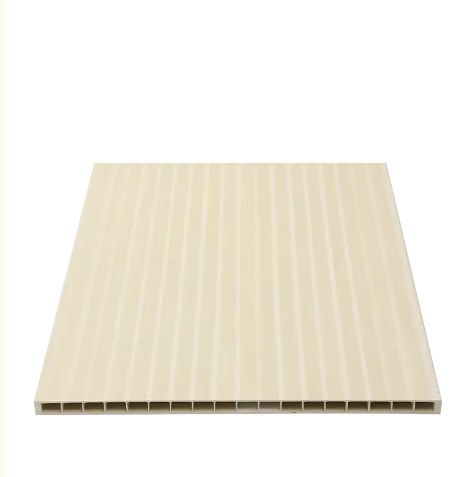
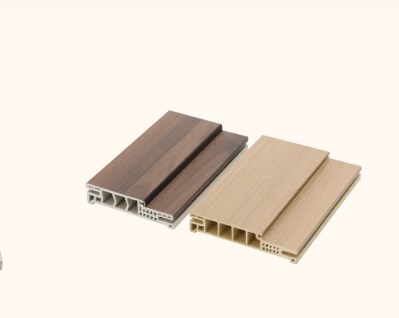
During a hotel extension project, the contractor handed us the same request twice: floor-to-ceiling partitions for 60 wet-area bathrooms and 24 corridor divider sections. They wanted a panel that would not swell at the bottom edge, could pass the local B1 fire test, and would arrive as a CNC-cut package rather than raw sheets. The plastic partition panel that answered those constraints was a UPVC partition board with hollow-core reinforcement and a sealed edge.
A plastic partition panel is a rigid polymer-based sheet or board used to divide interior spaces in bathrooms, changing rooms, clinics, kitchens, and utility corridors. When engineered from UPVC resin with impact modifiers, it resists water better than painted gypsum board and stays dimensionally stable in humid service. The same phrase also appears in casual DIY content about PVC pipe dividers, but commercial projects require a much stricter specification.
A plastic partition panel is a dry-fitted or screw-fixed polymer board used to create interior dividers where masonry is too heavy and gypsum is too vulnerable. For a project manager, the panel becomes practical when the site schedule does not allow wet trades to dry between coats.
A good UPVC partition panel behaves like a timber panel but with lower moisture expansion. It can be cut with standard woodworking tools, routed for hinge pockets, and fixed to a metal or timber frame. The surface does not need plastering, so installation time is measured in days rather than weeks.
For a closer look at how a UPVC partition board is built, read this manufacturer-level explanation of the UPVC partition board.
UPVC partition panels are the safer choice for wet environments; WPC panels are better when the surface must look closer to wood and humidity is moderate. Both materials belong to the polymer composite family, but their water uptake, edge stability, and surface hardness differ.
| Property | UPVC partition panel | WPC panel |
| Base polymer | Unplasticized PVC with impact modifiers | PVC and wood-fiber composite |
| Typical density | 1.35-1.45 g/cm3 solid, 0.55-0.75 foam core | 1.05-1.25 g/cm3 |
| Moisture behavior | Very low water absorption; edges can be capped | Moderate; cut edges should be sealed |
| Surface finish | Glossy or matte, smooth for cleaning | Wood-grain, warmer appearance |
| Fire behavior | Can meet B1/B2 with flame-retardant additives | Depends on PVC base and wood flour content |
| Installation | Screw, adhesive, or clip system | Screw and adhesive, similar tooling |
For most interior partitions, an 8mm, 10mm, or 12mm UPVC board is the practical range; thinner sheets bow and thicker laminates begin to behave like structural sheets. Hollow-core panels are lighter but more vulnerable to screw pull-out at the edges. Foam-core boards with dense skins offer a better balance for door leaves and tall partitions.
When a plastic partition panel arrives on site, the checking process should take less than 30 minutes per pallet. Do not rely on the manufacturer’s data sheet alone; measure a sample from the shipment and record the deviation.
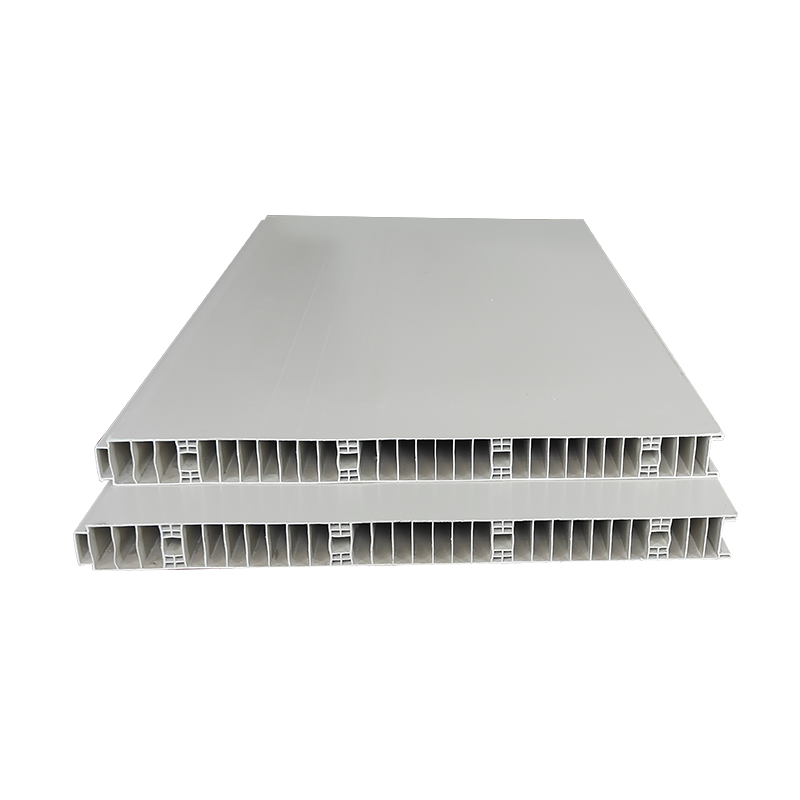 UPVC Partition Board for Moisture-Resistant Room DividersThis extruded UPVC panel offers waterproof, corrosion-resistant partitioning for humid or industrial spaces. Its smooth surface and light weight simplify installation, while thickness options suit various room-dividing needs.View Product →
A plastic partition panel is never a one-number product: acoustic rating, fire class, and screw-pull strength must be read from the specific formulation, not from the word PVC. A sealed hollow-core panel acts as a drum, while a foam-core panel damps sound better. With a 40mm air space and mineral wool, a double-skin UPVC partition can reach roughly 32 dB Rw, which is enough for an office meeting room but not for a recording studio.
Fire-rated plastic partition panels exist, but the certificate must match the exact board thickness and resin formula. An ordinary PVC compound cannot claim class B1 without a test report. For projects in a fire escape corridor, confirm whether the panel can be fixed with non-combustible steel brackets and whether the joints require fire-stop mastic.
Material cost is only half of the equation; edge finishing, packing, and installation labor often determine the real project cost. Closing joints, trimming edges, and adding aluminum extrusions can exceed the panel price. In an export order, sea freight and moisture barrier packing also matter.
| Check item | Why it matters |
| Sheet format | Determines cutting yield around doors and windows |
| Edge treatment | Exposed edges can wick moisture even in a waterproof panel |
| Fire certificate | Needed for permits and insurance documents |
| Shipping protection | Prevents damaged corners before installation begins |
Before comparing quotes, send your final partition layout to the supplier so they can calculate how many panels fit each room. For export projects, dealing with a dedicated polymer-profile manufacturer such as Jiangyin Gwing Technology Co., Ltd., which has supplied UPVC profiles since 2005, can simplify this step because they can confirm edge treatment before packing. Send a wall schedule through the company’s contact page and ask for both panel and frame options.
These are the questions that come up most often when a plastic partition panel is specified for the first time.
Yes, if it is a closed-cell UPVC panel with sealed edges and proper removable access panels. Standard wood-flour WPC should not be used in a continuously wet floor area because cut edges absorb water.
For typical 1.8m-high cubicles, 12mm UPVC panel on an aluminum frame is common. Use 8mm only when the panel is supported continuously or the unsupported span is under 400mm.
No. PVC partition board is made primarily from unplasticized PVC resin with additives, while WPC substitutes part of the polymer with wood fiber or other bio-based filler. WPC looks more natural, but UPVC is generally more moisture-stable.
Only when the specific formula contains flame-retardant additives and a test certificate covers that panel thickness. PVC itself can burn and release hydrogen chloride, so a fire-rated specification without documentation is not valid.

 English

 English
 عربى
 Español