A maintenance supervisor on a coastal project asked us why galvanized steel square tubes in his cable support frames were showing rust streaks after only 14 months. The failure was not a coating defect; it was a material selection problem. In salt-laden air, a PVC square tube with a correctly formulated UPVC compound holds its dimensions and surface for 20 to 30 years without painting.
PVC square tube, also called UPVC square pipe, is an extruded hollow profile with a square cross-section made from unplasticized polyvinyl chloride. It combines corrosion resistance, electrical insulation, and low maintenance at roughly half the installed weight of an equivalent steel profile. This guide explains which specifications matter, how the material compares with steel, aluminum, and wood, and what to verify before you place an order.
A PVC square tube is a rigid, hollow, square-section profile extruded from unplasticized polyvinyl chloride, and its long-term performance is set by the compound formula long before the profile reaches the extrusion die.
Core Definition
PVC square tube (UPVC square pipe): an extruded thermoplastic profile with a square cross-section, produced from PVC resin compounded with heat stabilizers, impact modifiers, titanium dioxide, and processing lubricants, then calibrated by the die to a fixed outer dimension and wall thickness.
The distinction between PVC and UPVC matters at the specification level. Plasticized PVC contains softeners that keep it flexible; UPVC removes those plasticizers and produces the rigid, self-extinguishing profile used in building and electrical work. Within UPVC, the real difference sits in the additive package. A profile made from recycled resin and a weak stabilizer system can pass a visual check, then chalk, crack, or sag within two years of outdoor exposure.
Three compound markers separate a durable PVC square tube from a marginal one.
Verify outer dimension tolerance, wall thickness, impact strength, and UV stabilization before ordering PVC square tube; these four parameters decide whether the profile fits its fittings, holds a screw, and survives exposure.
| Nominal size | Wall thickness | Standard length | Common use |
| 20 x 20 mm | 1.5 to 2.0 mm | 2.5 m / 4 m | light trim, edge protection |
| 25 x 25 mm | 1.8 to 2.5 mm | 2.5 m / 4 m | small frames, supports |
| 40 x 40 mm | 2.0 to 3.0 mm | 4 m / 6 m | partition frames, cable racks |
| 50 x 50 mm | 2.5 to 3.5 mm | 4 m / 6 m | equipment stands, heavy racks |
Wall thickness decides most structural failures. A 40 x 40 mm profile with a 1.5 mm wall deflects roughly twice as much as the same profile at 3.0 mm wall under an identical point load, and fastener pull-out strength drops even faster. If the design uses self-tapping screws, request pull-out force test data at the intended wall thickness before you commit to a batch.
In humid and chemically exposed conditions, PVC square tube delivers more service life per unit cost than galvanized steel, aluminum, or wood; it gives up raw load capacity, so it is not a substitute for steel beams.
Estimated service life in years for square tube materials in coastal humid exposure without surface maintenance. The UPVC bar is highlighted as the subject of this guide.
| Property | PVC / UPVC | Galvanized steel | Aluminum | Wood |
| Corrosion resistance | Excellent | Moderate | Good | Poor |
| Electrical insulation | Excellent | None | None | Good |
| Weight for equal stiffness | Heavy for plastic | Heaviest | Lightest | Light |
| Fastener retention | Good at 2.5 mm wall | Excellent | Good | Poor in wet use |
| Typical service life (coastal) | 20 to 30 yrs | 5 to 8 yrs | 10 to 15 yrs | 3 to 6 yrs |
The reason PVC square tube wins in wet or chemically aggressive environments is not toughness; it is inertness. Steel depends on a coating that eventually fails, aluminum resists corrosion but costs more and still reacts in chloride-rich air, and wood absorbs moisture and supports fungal growth. UPVC does not rust, does not rot, and needs no surface treatment.
PVC square tube is specified for light structural framing, cable support, partition frames, and moisture-exposed trim where corrosion resistance matters more than heavy load capacity.
A paired example: a cable tray support inside a wastewater pump station built with galvanized steel needed repainting every two years; replacing the light framing with UPVC square tube removed the maintenance cycle entirely over the next decade. The trade-off is real. You give up load capacity, and you gain a structure that ignores the environment.
A reliable PVC square tube manufacturer should state its compound ingredients, hold extrusion tolerances, and offer custom lengths without shifting quality between batches.
Supplier screening starts with the extrusion line, not the price sheet. A manufacturer with its own in-house factory and extrusion control can adjust wall thickness, calibrate outer dimensions, and test impact strength during production. A trading company reselling mixed batches cannot guarantee that the profile you receive matches the sample you approved. Jiangyin Gwing Technology Co., Ltd., which has operated UPVC profile extrusion since 2005, is an example of a producer that can document batch consistency from resin to finished square pipe.
Ask for five things: a material data sheet naming the stabilizer and impact modifier, dimensional tolerance records from the last three batches, UV weather test results, pull-out force data for self-tapping screws, and a clear policy on round versus square profile selection for your specific routing job.
For standard sizes, the company's UPVC square pipe product line covers the common cross-sections used in the applications above. If your drawing uses a non-standard dimension or a specific color, the custom profile route handles those requests.
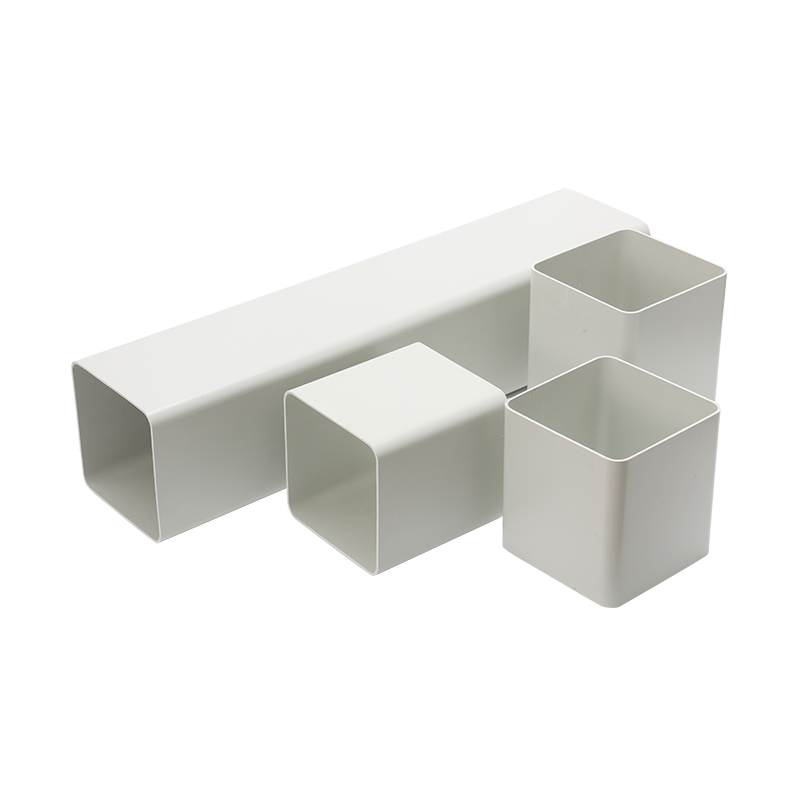 UPVC Square Pipe with Customizable Sizes and Corrosion ResistanceCheck this square pipe for standard cross-sections and custom dimensions, with strong corrosion resistance and aging properties suited for various applications.View Product →
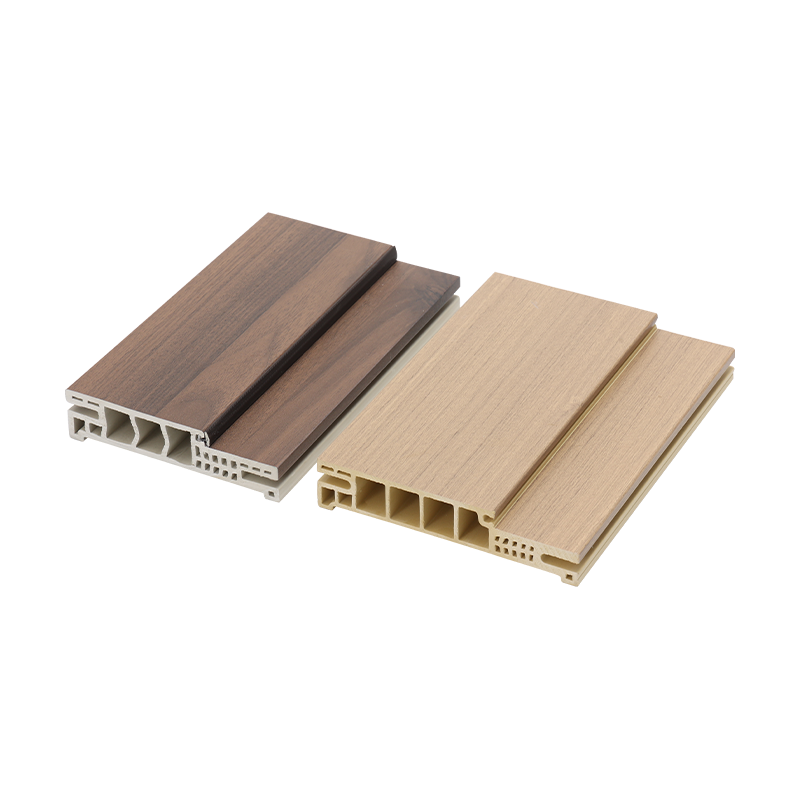 Customized WPC/PVC Products for Doors and Cable TraysExplore this category for personalized WPC/PVC solutions, including moisture-resistant doors and polymer cable trays, backed by nearly 20 years of manufacturing expertise.View Product →
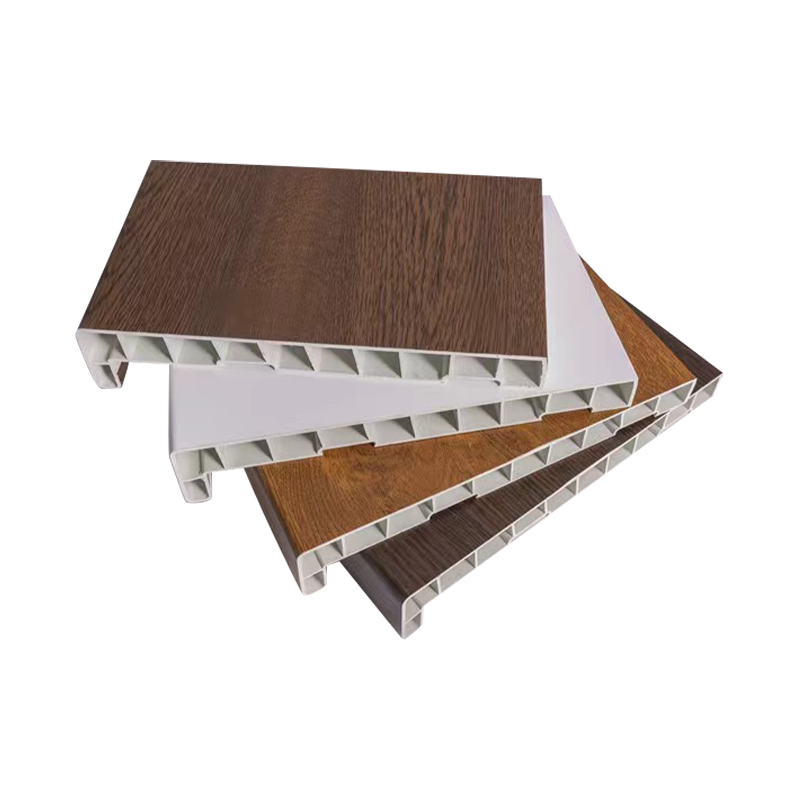 UPVC Material Series: Windowsills, Trays, Pipes, and PartitionsDiscover a range of UPVC products offering weather resistance, durability, and customization, ideal for architectural and electrical uses, from an experienced factory.View Product →
Yes, when the compound contains adequate titanium dioxide and a UV stabilizer. White UPVC with 4 to 6 parts of titanium dioxide per hundred retains impact strength and color for decades in most climates. Darker shades need stronger UV stabilization and cost more.
They deflect more than steel at the same dimensions, so spans must be shortened or wall thickness increased. For a light-duty shelf or cable rack, a 40 x 40 mm profile with a 3.0 mm wall is a practical starting point; for a structural beam, use steel.
PVC normally means plasticized material that stays flexible; UPVC removes the plasticizer, producing the rigid, self-extinguishing profile used in construction. When a specification says PVC square tube for building work, it almost always means UPVC.
Yes. Use a fine-tooth saw blade, drill pilot holes, and choose self-tapping screws designed for plastics. A wall thickness of at least 2.5 mm is recommended where screws carry sustained load.

 English

 English
 عربى
 Español