Sill material selection for builders and renovators
The pine sill under a 1998 bay window had been replaced once at year seven and again at year nine. The root cause was not the paintwork; it was capillary action pulling humid coastal air into the end grain. A PVC window sill board removes that failure mode at the profile level. It is an extruded UPVC component that caps the horizontal base of a window opening, sheds condensation and rain beyond the wall face, and ends the repeated repaint-and-replace cycle that timber sills make inevitable.
It is a rigid co-extruded UPVC profile with a solid outer cap layer and a dimensionally stable core, engineered to sit under the window frame, overhang the wall face, and carry condensation runoff away from the plaster line.
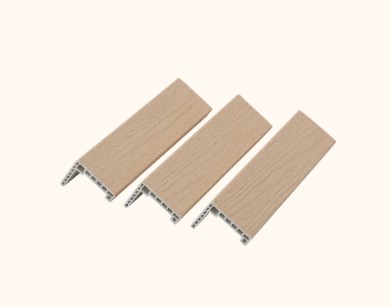
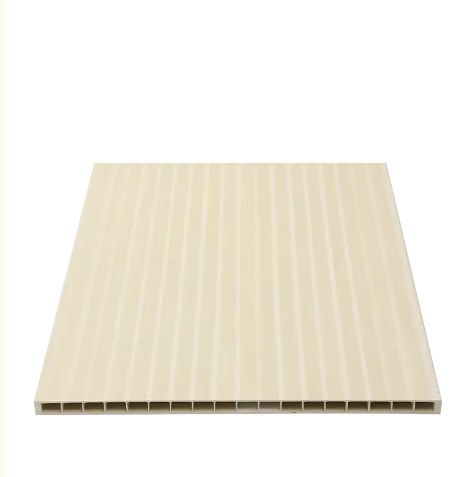
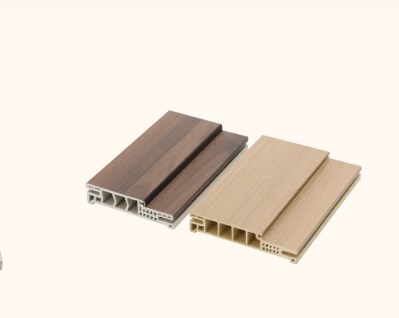
Manufacturers compound rigid PVC resin with calcium carbonate filler, impact modifiers, titanium dioxide, and UV stabilisers, then extrude the mix through a die. The profile cross-section matters as much as the polymer recipe. A correctly designed sill has internal webs that keep it flat under load, a front drip groove, and a co-extruded cap that carries the visible colour.
Core definition
A PVC window sill board is an extruded UPVC profile installed below the window frame to protect the sub-sill from moisture, provide a washable interior surface, and direct water outward. In building specifications, the term normally refers to rigid UPVC, not the flexible PVC used for gaskets and films.
Two grades dominate the market: cellular-core boards, which are lighter and cheaper and suit fully supported interiors, and dense co-extruded boards, which span unsupported openings and are the grade to specify for exterior exposure or wide reveals.
For the same window opening, a PVC window sill board outlasts solid wood in every moisture scenario and beats aluminium profile sills on surface temperature, condensation behaviour, and installed cost.
| Property | Solid wood sill | Aluminium profile sill | PVC window sill board |
| Moisture behaviour | Swells, splits, stains | No absorption; corrosion near salt air | Absorption below 0.1%, no rot |
| Maintenance | Sand and repaint every 2-3 years | Occasional polishing; coating wears | Wipe clean, no repainting |
| Winter surface temperature | Cold | Coldest option | Warm to touch |
| Typical service life in a humid room | 8-12 years | 20+ years | 25+ years |
| Installed cost level | Moderate | High | Low to moderate |
Six measurable parameters decide whether a sill still looks correct and performs at year 15: wall thickness, UV cap thickness, impact resistance, fire rating, screw retention, and colour stability.
Field rule: most premature failures of a PVC window sill board are installation mistakes, not extrusion defects. The first thing an inspector checks is the expansion allowance at the ends of the profile.
A correctly installed PVC sill needs no maintenance beyond wiping for two decades, but a rushed install can fracture the profile within one heating season.
Cut the profile with a fine-tooth blade, deburr the cut edge, and fit it at a temperature above 10°C. If the sill surface is walked on during framing, protect it with a sacrificial board; point loads near unsupported edges can exceed the profile's impact strength even when the wall thickness is correct.
Over 15 years, a PVC window sill board costs $120 per opening versus $260 for solid wood and $175 for aluminium. The polymer option is the only one that never needs repainting and never requires a mid-life replacement.
Assumes a standard 1.2 m window opening, installed cost, repainting every three years for wood, and one full sill replacement for wood during the period.
The final quality of a PVC window sill board is set by the extrusion line, so a buyer should audit the manufacturer's compounding and profile design before comparing price lists.
Jiangyin Gwing Technology Co., Ltd. has produced UPVC window sill boards and related polymer profiles for nearly two decades from its facility in Jiangyin, China. The company's profile range includes co-extruded sills in standard lengths, custom cut lengths, and colour-matched runs for door and window systems. For project buyers, the practical questions are simple: what wall thickness does the line hold consistently, is the UV cap co-extruded or painted, and can the factory match a custom profile drawing?
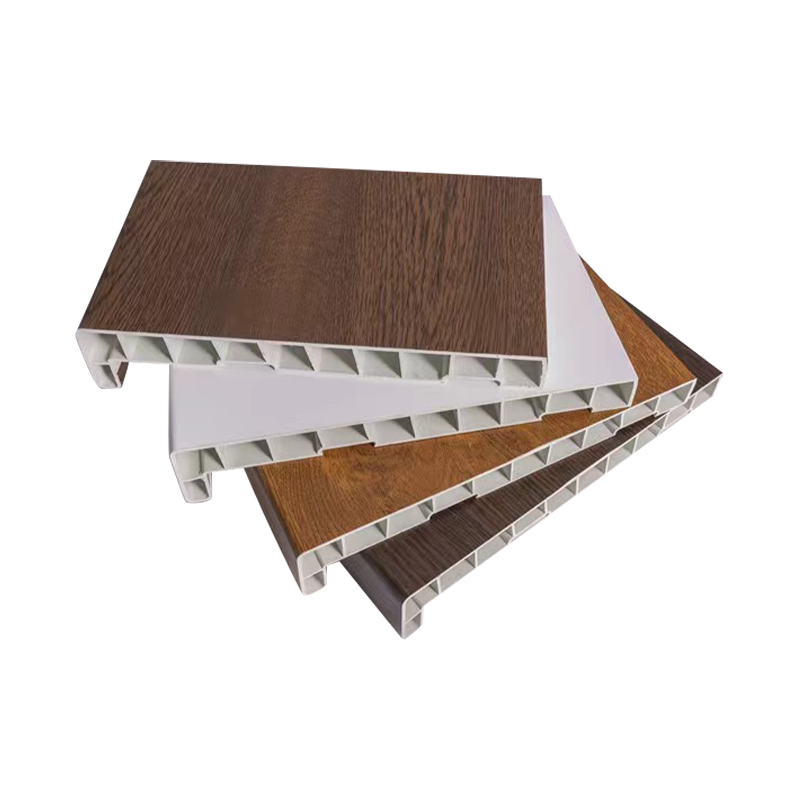 UPVC Window Sill Board with Co-extruded UV Cap OptionsCheck the full sill board range—triangle and rectangle series, multiple widths, and customisable colours—ideal for projects requiring durable, waterproof profiles.View Product →
Customised sills for non-standard openings are a separate production route. When a project needs a specific width, angle, or colour match, the profile drawing is the contract; a factory with in-house compounding can usually deliver samples within two to three weeks. Send the profile drawing for a quotation and compare the offer against the thickness and cap specifications listed above.
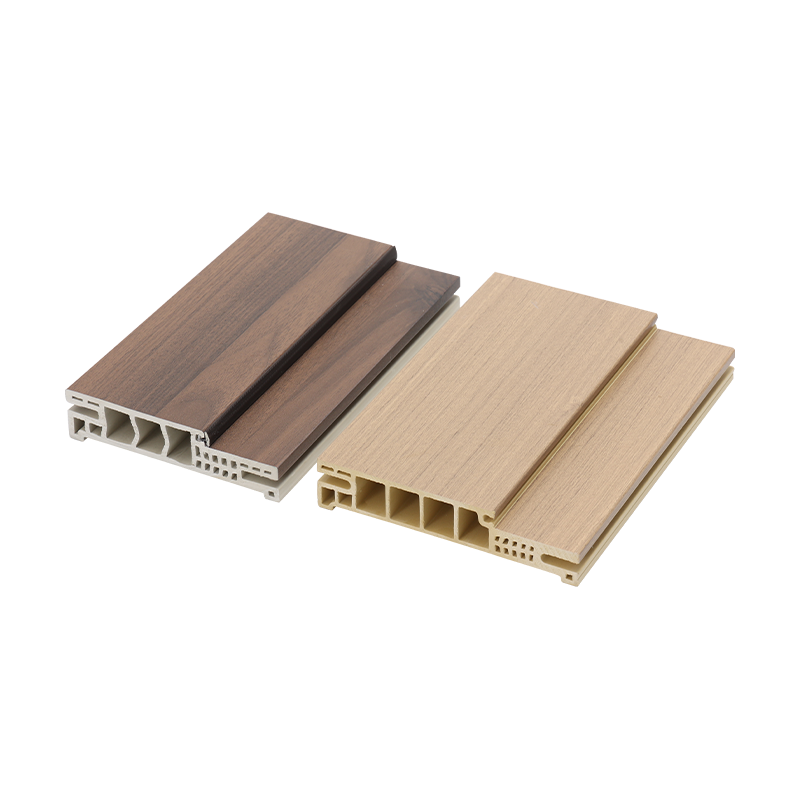 Custom Polymer Profiles for Non-Standard OpeningsThis page covers bespoke sill and profile production, but for detailed specs or drawings you must contact the factory directly for a tailored quotation.View Product →
Yes, with an acrylic exterior paint formulated for PVC, but painting removes one of the material's main advantages: a maintenance-free surface. If the factory colour range does not match, consider a co-extruded colour instead of painting.
Standard extrusion lengths are typically 3 m, 4 m, or 5.6 m. Most manufacturers cut to length and can co-extrude the end cap profile; for large projects, the cutting list should be part of the purchase order.
A 2.0 mm wall profile will carry normal install loads across its full width, but point loads near unsupported edges can crack the polymer. Protect the sill during framing or wait until after rough work to install it.
UPVC expands roughly 0.07 mm per metre per 10°C of temperature change. On a 1.5 m sill exposed to direct sun, that movement reaches 4-6 mm; without a gap, the profile buckles or pushes the end caps off.

 English

 English
 عربى
 Español