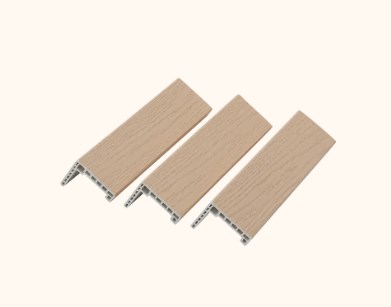
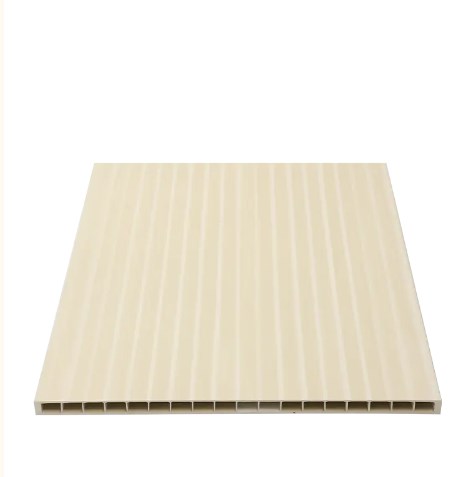
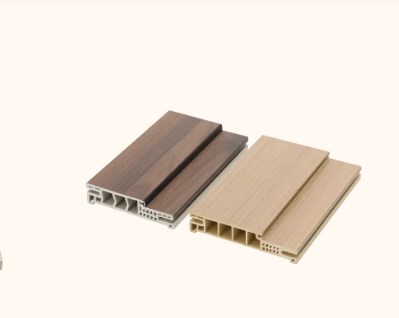
A windowsill board sits in one of the harshest microenvironments in any building. On the interior face, it's exposed to condensation from the cold glass above it in winter, sunlight that accelerates surface degradation over time, and regular contact with plants, cleaning products, and objects placed on the sill. On the exterior face, it takes direct rain, freeze-thaw cycling, UV radiation, and debris impact. It's expected to look good and perform without maintenance for the life of the building's decoration cycle — typically ten to twenty years between major refurbishments.
Timber windowsills have been the default for centuries, and they work reasonably well when properly installed, primed, painted, and maintained. The problem is that maintenance rarely happens on schedule, and a timber sill that isn't regularly repainted starts deteriorating at the paint-wood interface: moisture penetrates the paint film, the wood swells and contracts seasonally, the paint cracks and lifts, and once exposed wood begins to absorb water, rot follows. By the time a timber sill looks obviously damaged, the deterioration has typically been progressing for years.
UPVC windowsill boards eliminate most of this maintenance cycle. They don't rot, don't need painting, and their dimensional stability under moisture and temperature change means the failure modes that affect timber simply don't apply in the same way. Understanding what UPVC windowsill boards are, how they're made, and what determines their quality helps builders, developers, and renovation specifiers make better choices at the sourcing stage.
UPVC stands for unplasticized polyvinyl chloride. The "unplasticized" designation is significant: standard PVC contains plasticizers (typically phthalates) that make it flexible and soft — think of the flexible plastic sheeting used in packaging or garden hoses. UPVC has no plasticizers, which makes it rigid, dimensionally stable, and significantly more resistant to UV degradation and surface hardness loss over time than plasticized PVC.
UPVC has been the standard material for window frames in European markets for decades, precisely because it provides the durability, weather resistance, and low maintenance that timber window components require but can't consistently deliver across a twenty-year service life. The same material properties that make UPVC ideal for window frames — rigidity, moisture resistance, UV stability, cleanability — make it well-suited for windowsill boards.
UPVC windowsill boards are produced by extrusion, the same process used for UPVC window profiles. The material is melted and forced through a shaped die, producing a continuous board profile with defined dimensions. The extrusion process produces a consistent cross-section along the entire length, which matters for installation: a board that's uniform in thickness and width across its length cuts and fits more cleanly than timber, which varies in dimension with grain and moisture content.
Windowsill boards serve different functions and face different conditions on the interior and exterior of the window, and the specification should reflect that.
Interior windowsill boards are decorative and functional surfaces that extend from the window frame into the room. They need to be visually consistent with the room's interior finish, resist condensation from the window above without absorbing moisture, carry the load of objects placed on them without flexing noticeably, and clean easily. They're typically wider than exterior sills — 150mm to 400mm depending on wall thickness and window recess depth — because they need to bridge the full depth of the window recess and provide a useful shelf surface.
Interior UPVC sills are typically supplied in white or cream to match UPVC window frames, and in wood-grain finishes (oak, walnut, grey wood tone) for installations where a warmer visual result is required. The surface finish is factory-applied and doesn't require painting — the color runs through the extrusion or is applied as a durable foil laminate. Either way, cleaning with a damp cloth and mild detergent is all the maintenance required.
One installation consideration specific to interior UPVC sills: the board must be fitted with adequate clearance at the ends for thermal expansion. UPVC has a higher coefficient of thermal expansion than timber — approximately 70 µm/m·°C versus 5–8 µm/m·°C for softwood along the grain. For a 1.5m sill in an environment ranging from 5°C in winter to 35°C in summer, the total length change across that temperature range is approximately 3mm. The installation detail must accommodate this movement — typically by leaving small end gaps filled with flexible sealant rather than hard-fixing the board at both ends with no allowance for expansion.
Exterior windowsill boards are primarily functional: they shed rainwater away from the wall below the window, protect the masonry or render beneath the window frame from water penetration, and need to maintain their form and adhesion through years of direct weather exposure. Exterior sill profiles include a drip groove on the underside (a small channel that breaks the water film and prevents capillary action drawing water back under the sill toward the wall) and a slight forward slope that directs runoff away from the building face.
UPVC exterior sills don't need painting and won't rot even when the sealant around them ages and allows some moisture contact. The UV stabilizers in the UPVC formulation prevent the chalking and surface degradation that affect lower-grade PVC exposed to sustained sunlight. For exterior applications in climates with intense UV exposure — high altitude, Mediterranean or tropical climates — confirming that the UPVC compound includes UV stabilizer at adequate loading is a relevant specification question.
| Property | UPVC Windowsill Board | Softwood Timber | MDF / Moisture-Resistant MDF | Natural Stone / Marble |
|---|---|---|---|---|
| Moisture resistance | Excellent — no water absorption | Poor without regular painting — rots at paint failures | Moderate (MR MDF) to poor (standard MDF) | Excellent — but porous stone stains |
| UV resistance | Good (UV-stabilized compound) — no yellowing | Poor — paint UV degrades, timber greys without treatment | Moderate — surface foil can lift with UV and heat | Excellent — most stone unaffected by UV |
| Maintenance requirement | Low — wipe clean, no repainting | High — regular inspection and repainting required | Moderate — surface damage difficult to repair | Low for polished stone — sealing required for porous types |
| Thermal expansion | Higher than timber — expansion gaps required in installation | Low along grain — moves with humidity, not temperature | Moderate — swells more with moisture than temperature | Low — negligible movement in normal conditions |
| Weight | Light — easy to handle and cut | Light to moderate depending on species | Moderate — heavier than UPVC for same section | Heavy — requires structural support for wide sills |
| Installation ease | Easy — standard saw cuts, adhesive or screw fixed | Moderate — requires priming and painting before use | Easy to cut but edge sealing required | Requires specialist cutting tools and substrate preparation |
| Cost per linear metre | Low to moderate | Low (material) — high (total with maintenance over time) | Low | High — material and installation cost |
| Colour/finish options | White, cream, woodgrain, grey, custom foil options | Any painted colour; natural timber stains | Any painted colour or foil laminate | Limited to available stone types |
| Best for | New builds, renovations, humid environments, volume projects | Traditional character properties where matching existing material | Dry interior applications with budget constraint | Premium specification where weight and cost acceptable |
UPVC windowsill boards are typically available in standard widths from 100mm to 400mm, with 150mm, 200mm, 250mm, and 300mm being the most common standard sizes for residential applications. Length is usually 3m per board as a standard supply length, cut to the required window width on site. The board thickness is typically 18–25mm — enough to provide rigidity across the unsupported span of most window openings without the board deflecting noticeably when load is placed on it.
The correct board width for a given installation is determined by the window recess depth — the distance from the inside face of the window frame to the finished wall surface on the room side. The sill should bridge this gap fully and project slightly beyond the wall face to give a visible nosing edge. A projection of 10–15mm beyond the wall face is standard for residential work. Measure the actual recess depth at the installation location rather than relying on the nominal wall specification — inconsistent plastering depth is common and affects the required board width by 10–20mm in either direction.
Profile edge options on standard UPVC sills include square-edge (clean, contemporary), rounded nose (traditional), and ogee (more ornate profile). The underside may be flat (for interior sills sitting on a solid substrate) or include a drip groove (for exterior sills and interior sills installed above a cavity or overhang).
UPVC windowsill boards are typically bedded on a continuous bead of flexible adhesive or sealant (MS polymer or neutral-cure silicone) applied to the substrate. This both bonds the board and provides a flexible layer that accommodates the thermal movement of the UPVC without transmitting stress to the board edges. The front edge of the board should be sealed to the wall surface with flexible sealant, not a hard filler, for the same reason.
End caps — small injection-moulded UPVC pieces that clip onto or are glued to the exposed ends of the board where it terminates at the window reveals — give a finished appearance to the sill ends and prevent the end-grain profile from being visible. They're a small accessory but make a visible difference to the finished appearance, particularly where the sill butts up against a return wall rather than running to a corner.
For installation in window openings where the existing timber sill is being replaced, the UPVC board needs to be sized to the actual opening rather than to the nominal window size. Old openings in renovated buildings often have irregular dimensions — plaster buildup on one side, minor settlement affecting level — and the UPVC sill needs to be measured and cut to the specific opening rather than assumed to match a standard size.
UPVC has a softening temperature well above the surface temperatures produced by convective heat from radiators or underfloor heating systems — typical surface temperatures in these applications are 30–45°C, and UPVC retains full rigidity up to approximately 60°C in standard formulations. Direct heat sources (e.g., a fan heater pointed at the sill) should be avoided, as sustained direct heat at high temperatures can cause surface distortion. For windowsills positioned directly over convector radiators or heating units recessed in the floor below the window — a common configuration — confirm with the supplier that the UPVC compound's heat resistance rating is appropriate for the expected maximum surface temperature in that specific installation location.
A fine-tooth circular saw blade (60–80 tooth count for 160–185mm blade diameter) produces the cleanest cuts in UPVC board. A mitre saw with the same blade specification allows accurate angle cuts. The cutting speed should be moderate — UPVC cut too quickly generates heat that can melt and reseal the cut edge, producing a rough or irregular surface. A slow feed rate with a sharp blade produces a clean cut that requires no sanding for a finished edge. For the lengthwise trimming sometimes needed to fit irregular openings, a track saw or table saw with fine blade produces good results. Standard HSS saw blades (designed for wood) also work but produce a rougher edge than a blade with more teeth and lower tooth pitch.
Yes — UPVC extrusion tooling can be made to custom profile specifications for orders above the minimum run quantity that justifies the die cost. For standard residential projects, the range of stock widths (100–400mm in 50mm increments) covers the majority of applications without custom tooling. For large commercial or development projects where a specific sill width outside the standard range is required — or where a custom nose profile needs to match an existing architectural detail — custom extrusion dies can be produced. Lead times for custom extrusion tooling are typically 4–6 weeks from drawing approval, after which production runs to the custom specification. Minimum order quantities for custom-profile production vary by manufacturer; for large development projects, volume requirements typically make the tooling investment straightforward to justify.
UPVC Windowsill Board | UPVC Partition Board | UPVC Cable Tray | WPC Door Frame | WPC Doors | Contact Us

 English

 English
 عربى
عربى Español