When buyers compare PVC and uPVC boards, the most important question is not simply which material is “better.” The right choice depends on plasticizer content, board structure, density, surface finish, exposure conditions, fabrication method, fire requirements, and the project budget. For cabinetry, signage, wall cladding, and display furniture, JiangYin Gwing Technology Co. Ltd helps buyers compare the actual board specification rather than relying on the product name alone.
PVC stands for polyvinyl chloride, a thermoplastic resin that can be formulated as a flexible material or as a rigid sheet. In general, conventional flexible PVC contains plasticizers that lower hardness and increase flexibility. A rigid PVC board may contain little or no plasticizer, but the commercial name “PVC board” does not always reveal the exact formulation.
uPVC means unplasticized polyvinyl chloride. Without intentionally added plasticizers, it is normally harder, more rigid, and more dimensionally stable than plasticized PVC. However, export catalogs may use uPVC broadly, so buyers should confirm whether the board is solid uPVC, free-foam PVC, Celuka or crust-foam PVC, or a co-extruded structure.
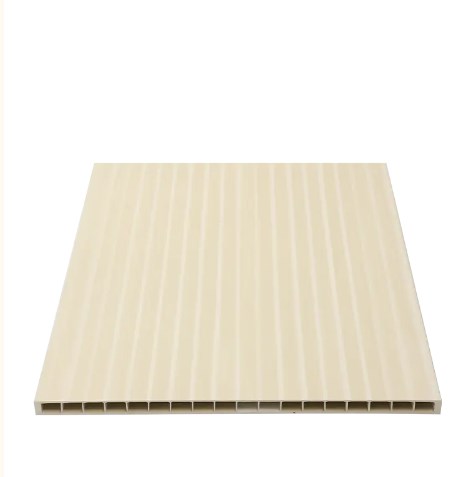
Manufacturing structure has a major effect on performance:
Density and thickness should be selected together. A low-density board may be ideal for indoor signs, while a higher-density or crusted board is more suitable for routed letters, furniture parts, or semi-permanent outdoor panels.
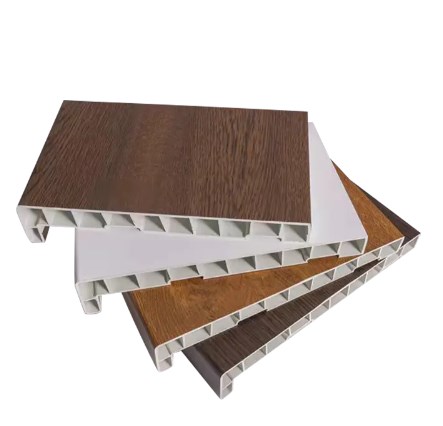
Neither PVC nor uPVC has one universal performance value. A 3 mm flexible PVC sheet, a 10 mm free-foam board, and a 20 mm Celuka board will behave very differently. The figures below are planning ranges, not a substitute for the selected product’s technical data sheet.
| Property | Typical PVC or uPVC foam-board tendency | What the buyer should verify |
|---|---|---|
| Rigidity | uPVC and higher-density boards usually provide greater stiffness than plasticized PVC. | Density, flexural strength, flexural modulus, and thickness. |
| Water absorption | Closed-cell PVC foam boards commonly report about 0.5% to 1.0% or less under the applicable test method. | ASTM D570 result, test duration, specimen condition, and whether edges were sealed. |
| Thermal conductivity | Typical foamed PVC references are approximately 0.035 to 0.055 W/m·K, providing modest thermal insulation. | Density, board structure, test method, and declared conductivity. |
| Sound performance | Foamed boards can damp some vibration and reflected sound, but a thin sheet is not a complete acoustic barrier. | Sound absorption coefficient, sound transmission loss, frequency, thickness, and assembly design. |
| Impact resistance | A denser skin and suitable impact modifiers can improve resistance to dents and handling damage. | Notched Izod or falling-impact data and the surface construction. |
| Dimensional stability | uPVC normally has lower plasticizer-related movement, but all PVC boards expand with heat. | Linear thermal expansion coefficient, thickness tolerance, and installation clearance. |
Water-resistant does not mean that an installation is automatically waterproof. Water can enter through unsealed cut edges, screw penetrations, joints, or an unsuitable adhesive. Seal wet-room joints and penetrations with a compatible system.
Fire safety requires special care. ASTM E84 measures comparative surface flame spread and smoke-developed indexes; it does not approve a board for every application. Some U.S. code contexts use limits of flame spread index 75 and smoke-developed index 450, but the required classification depends on occupancy, location, thickness, assembly, and the adopted local code. Ask for an ASTM E84 or UL 723 report for the exact board and thickness. Do not describe an untested board as “fireproof.”
Outdoor life depends on UV stabilizers, pigments, weatherable skins, protective laminates, and installation orientation. Confirm accelerated-weathering data or an outdoor warranty before specifying permanent signage or cladding.
For bathroom or kitchen cabinetry, uPVC or rigid PVC foam board is often selected because it resists moisture, does not rot, and can be cleaned easily. A dense surface or laminated finish helps where the board receives frequent contact or cleaning. For lightweight display furniture, free-foam PVC can reduce handling weight and machining time.
For outdoor signs, choose a UV-stabilized, higher-density board or weatherable surface. Consider aluminum composite panels when a thin, very flat face is more important than easy routing. For wall cladding, verify fire classification, thermal movement, joint design, wind loading, and the complete assembly.
For project selection, use this decision logic:
| Alternative | Where it may be preferable | Main trade-off versus PVC or uPVC board |
|---|---|---|
| Plywood | High screw-holding strength and structural furniture parts. | Requires sealing and finishing; can swell or delaminate when exposed to water. |
| Aluminum composite panel | Flat outdoor signs, facade graphics, and thin panel systems. | More difficult to route deeply; metal skins may complicate edge finishing. |
| MDO panel | Painted exterior signs and applications needing a wood-based painted substrate. | Heavier and dependent on edge sealing and coating maintenance. |
Most rigid PVC boards can be cut with a fine-tooth circular saw, panel saw, jigsaw, or CNC router. Use a sharp plastic-cutting blade, support the sheet fully, and avoid forcing the tool. For CNC routing, start with conservative supplier-recommended settings and adjust through a test cut. Cutter choice depends on thickness, density, diameter, and machine rigidity.
To reduce chipping and cracking, keep protective film on the face, support narrow pieces, and avoid overtightening clamps or screws. Drill pilot holes, allow clearance for thermal movement, and use washers. Do not rely on a thin foam edge to carry a heavy suspended load without backing support.
Select adhesive according to the board surface and the second material. PVC solvent cement can work for compatible PVC-to-PVC joints, while polyurethane, MS polymer, acrylic, or structural adhesives may suit other substrates. Follow the compatibility chart and seal exposed joints and cut edges where water or repeated cleaning is expected.
PVC and uPVC boards can accept digital printing, screen printing, vinyl, paint, and decorative laminates when properly prepared. Remove dust, use a compatible cleaner, and apply a PVC primer when specified. Test adhesion, UV exposure, and chemical resistance. Avoid acetone or ketones unless compatibility is confirmed.
For maintenance, use mild soap, water, and a soft cloth. Avoid abrasive pads, uncontrolled heat, and strong solvents. Inspect outdoor joints, fasteners, and sealants periodically; failure of the installation details, rather than failure of the board itself, is often the first cause of water or movement problems.
U.S. retail listings show how widely PVC foam-board prices vary. Small cut pieces may cost only tens of dollars, while a 4 ft x 8 ft sheet in a thicker or higher-density grade can reach several hundred dollars. As a planning reference, buyers may encounter roughly USD 15 to USD 275 across mixed sizes and thicknesses in online retail listings, while specialty structural PVC foam sheets may be priced separately by thickness, surface, and quantity. Export, pallet, and container prices are not directly comparable with retail prices because freight, cutting, packaging, certification, and order volume change the total.
For a realistic comparison, calculate delivered cost per square foot:
Delivered cost per square foot = material price + packaging + freight + duty + local delivery, divided by usable square feet.
A properly selected PVC or uPVC board can provide a long service life in indoor, humid, and many outdoor applications. The actual life depends on UV exposure, color, temperature cycling, impact, joint design, and whether the board is load-bearing. Ask for lead, heavy-metal stabilizer, VOC, and safety declarations when the board is used in kitchens, healthcare, schools, or occupied commercial interiors. “Low VOC” and “lead-free” should be supported by a supplier declaration or test report rather than assumed from the word uPVC.
PVC is durable but not biodegradable. Clean production offcuts may be recyclable through a manufacturer or specialist plastics recycler, although acceptance varies by region and contamination level. Keep PVC scrap separate from wood, metal, silicone, and adhesive waste, and confirm local recycling rules before disposal. A long service life and low maintenance can reduce replacement waste, but responsible end-of-life planning remains part of a sustainable specification.
JiangYin Gwing Technology Co. Ltd can help procurement teams, sign manufacturers, furniture fabricators, and construction buyers compare board density, thickness, surface structure, color, UV stability, fire documentation, packaging, and export requirements. Send your application, dimensions, annual quantity, climate, finishing method, and required standards to request a technical recommendation or sample kit. A project-specific comparison is the safest way to decide between PVC, uPVC, Celuka, co-extruded, and alternative panel materials.
uPVC is PVC resin formulated without intentionally added plasticizers, so it is generally more rigid and dimensionally stable. “PVC board” may describe flexible PVC, rigid PVC, or foamed PVC. Always confirm the formulation and board structure in the technical data sheet.
Both can be suitable when they have the required low-emission, lead-free, and chemical-resistance documentation. uPVC or rigid PVC foam board is commonly chosen for moisture-prone cabinetry because it does not rot or swell like untreated wood. Safety depends on the complete formulation and finish, not the name alone.
Rigid uPVC can offer useful stiffness and dimensional stability, but outdoor suitability depends on UV stabilizers, density, surface skin, color, thickness, fastening, and fire requirements. Request weathering data and an outdoor-grade specification.
Ask for a valid ASTM E84 or UL 723 report for the exact product and thickness, including flame spread and smoke-developed indexes. The required class depends on the adopted building code, occupancy, location, assembly, and project authority. ASTM E84 results should not be treated as a universal approval.
Use sharp plastic-cutting tools, fully support the sheet, keep protective film in place, drill pilot holes, avoid excessive clamp pressure, and allow for thermal movement. Test the selected adhesive and sealant before production installation.
Yes. PVC-compatible primers, acrylic or polyurethane coatings, vinyl films, digital inks, screen-printing systems, and suitable laminates can be used after cleaning and surface preparation. Conduct an adhesion and chemical-resistance test on the actual board.
There is no single fixed price. Small retail pieces may be relatively inexpensive, while large, thick, dense, UV-stabilized, laminated, or fire-tested boards cost more. Compare delivered cost per usable square foot, including freight, packaging, duty, cutting waste, and finishing.
Technical references: ASTM E84 surface-burning test method; ASTM D570 water-absorption test method; International Building Code Chapter 26. Confirm current code adoption and product-specific test reports before commercial installation.

 English

 English
 عربى
عربى Español