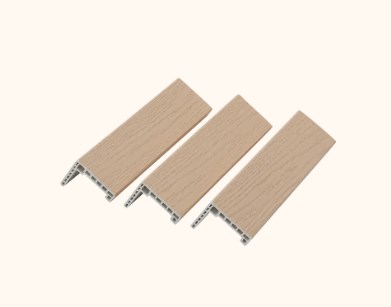
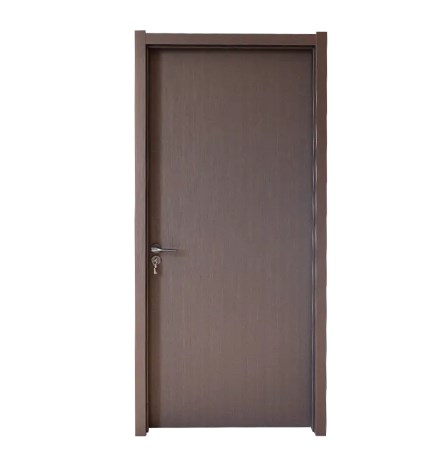
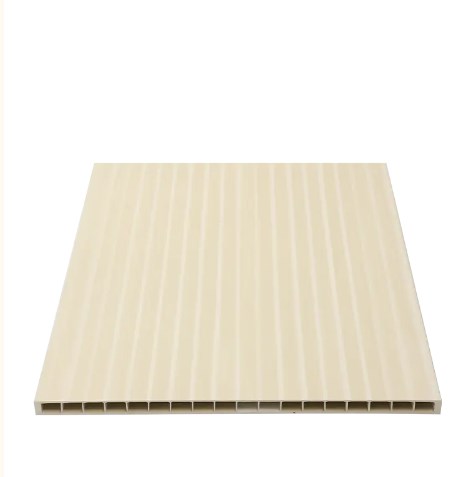
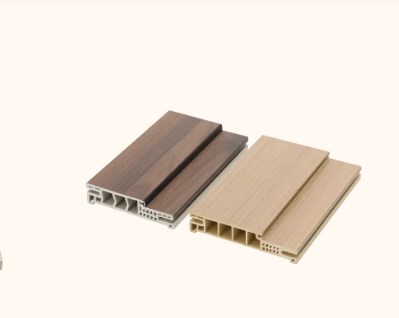
With the growing awareness of environmental protection and sustainable development, WPC (Wood Plastic Composite) frames, as an innovative building and decorative material, are gradually becoming an important choice in modern architecture. WPC frames, with their excellent performance and unique advantages, have become the focus of attention for more and more manufacturers.
WPC frames are a composite material made from wood and plastic. They retain the natural texture and beauty of wood while combining the durability and water resistance of plastic. This composite material is typically composed of wood fibers, plastic resins, and a certain proportion of additives, manufactured through a high-temperature and high-pressure process. WPC frames are widely used in construction, landscaping, furniture, and other fields due to their high strength, corrosion resistance, and strong weather resistance.
The unique advantages of WPC frames make them a substitute for wood and traditional plastic materials in many applications. First, WPC frames have excellent water resistance and weather resistance. Due to their plastic components, WPC frames effectively prevent moisture penetration, avoiding the swelling, deformation, or decay of wood caused by moisture. This makes them particularly outstanding in outdoor environments, especially in humid or rainy areas.
WPC frames have high strength and wear resistance. They can withstand significant physical impact and are less prone to cracking or breaking after prolonged use. Compared to traditional wood, the maintenance costs of WPC frames are also significantly reduced, eliminating the extra costs associated with painting and repairs.
The environmental performance of WPC frames has also earned them market favor. Because their raw materials include recyclable plastics, WPC frames have a smaller environmental impact during manufacturing and use. They not only meet the requirements of modern architecture for environmentally friendly materials but also respond to the globally advocated concept of sustainable development.
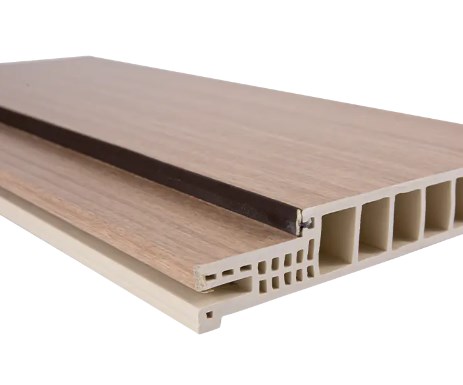
The manufacturing process of WPC frames is key to their excellent performance. From the selection of raw materials to the formation of the final product, every step requires precise control. First, wood fiber is one of the core components of WPC frames. The source of wood fiber is usually processed wood waste, which not only reduces the waste of wood resources but also lowers production costs. Secondly, plastic resin, as another important component, is usually selected from materials such as polyethylene (PE), polypropylene (PP), or polyvinyl chloride (PVC). These plastics not only provide material durability but also endow the WPC frame with waterproof and UV-resistant properties.
During the manufacturing process, the WPC frame is produced by mixing wood fibers and plastic resins using extrusion molding technology. This involves a series of steps including high-temperature heating, extrusion, and cooling, ultimately resulting in a frame product with a fixed shape. Other reinforcing agents or anti-aging agents can also be added as needed to improve the material's oxidation resistance and durability.
This manufacturing process ensures the uniformity and stability of the WPC frame, so that each frame has the same physical properties. In addition, the surface treatment of the WPC frame is also very important. Through different processing methods, such as spraying, hot pressing, and drawing, the frame surface can be made smoother and more delicate, even mimicking the texture of wood, enhancing its appearance and texture.
Due to its excellent performance, WPC frames have been widely used in many fields. One of the most typical applications is in the construction industry, especially in exterior wall decoration and landscaping. Because WPC frames are not susceptible to moisture and rot, and their surfaces do not fade easily, they have become an ideal alternative to traditional wood. Many modern buildings are beginning to use WPC frames in exterior wall decoration, door and window frames, and balcony railings to improve the durability and aesthetics of the building.
In addition, WPC frames have a wide range of applications in the home furnishings industry. For example, WPC frames are used to make furniture, doors and windows, and flooring. Due to their material stability and excellent durability, WPC frames not only provide a long service life in home products but also improve overall environmental performance, making them increasingly popular with consumers.
In the field of landscaping, the waterproof and corrosion-resistant properties of WPC frames make them particularly outstanding in the construction of flower beds, fences, and pergolas. These applications usually require materials that can withstand various weather conditions, and WPC frames perfectly meet this demand.
Choosing a reliable WPC frame manufacturer is crucial to ensuring product quality. The manufacturer's technical strength is an important consideration. A manufacturer with advanced production technology and complete production equipment can guarantee the quality and stability of WPC frames. The manufacturer's selection of raw materials is also crucial. High-quality raw materials can effectively improve the performance of WPC frames, especially the ratio and processing technology of wood fibers and plastic resins, which directly affect the strength, durability, and appearance of the frame.
In addition, the manufacturer's production management system and quality control measures are also key factors in evaluating its reliability. A qualified WPC frame manufacturer should have a comprehensive quality monitoring system and be able to provide detailed quality inspection reports to ensure that the quality of each batch of products meets the standards. Furthermore, the manufacturer's after-sales service is also an important factor. Good after-sales service can help customers solve problems during use in a timely manner and ensure the long-term performance of the product.
Yes, WPC framing has excellent water resistance, corrosion resistance, and weather resistance, making it suitable for long-term outdoor use, especially in humid or rainy areas.
Compared to traditional wood, WPC framing has lower maintenance costs. It does not require regular painting or anti-corrosion treatment, thus reducing the frequency and cost of maintenance.
WPC framing performs well in high-temperature environments; its plastic components give it strong heat resistance. Even in high summer temperatures, WPC framing is not easily deformed or damaged.
WPC framing is composed of wood fibers and plastic resins, and the plastic components are usually recyclable, so it has good environmental performance. It meets the requirements of modern architecture for sustainable development and environmentally friendly materials.
High-quality WPC framing should have a uniform texture, a smooth surface, and a sturdy structure. When choosing, you can ask the manufacturer to provide detailed quality inspection reports and evaluate the product through samples.
WPC framing, as an environmentally friendly, durable, and aesthetically pleasing material, has been widely used in various industries. Choosing the right WPC frame manufacturer can not only ensure high-quality products but also provide professional technical support and after-sales service. In the future, with the increasing market demand for environmentally friendly building materials, the application prospects of WPC framing will be even broader.

 English

 English
 عربى
عربى Español