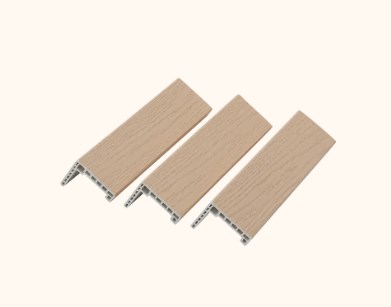
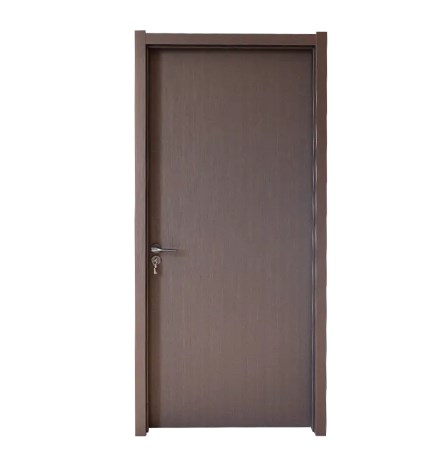
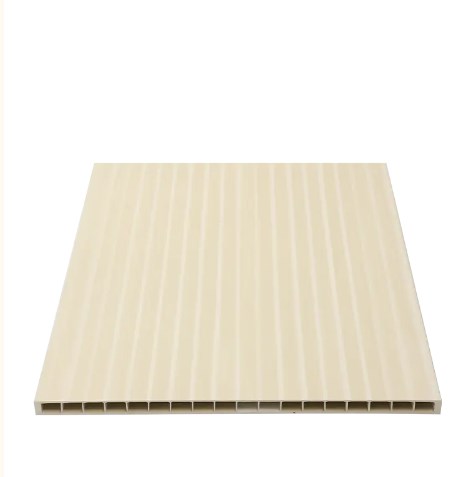
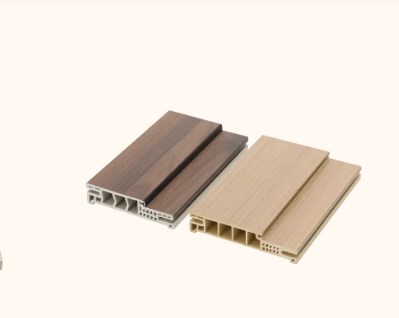
Wood-Plastic Composite (WPC) decoration material is a high-performance, environmentally friendly new decorative material made by mixing wood fiber/wood powder and thermoplastic plastics through professional processing technology. It perfectly combines the natural texture of wood and the durability of plastics, completely solving the pain points of easy decay, deformation, moth-eaten, and high maintenance costs of traditional wood materials.
After a large number of practical applications and performance tests, WPC decoration material has a service life of more than 15 years, which is 3-5 times that of solid wood decorative materials; its formaldehyde emission is far lower than international environmental protection standards, and it can be 100% recycled and reused, fully complying with the low-carbon and green development requirements of the global decoration industry. Whether it is indoor wall and ceiling decoration, or outdoor guardrail, floor and landscape decoration, WPC decoration material can stably exert excellent performance, and has become the preferred alternative to solid wood and plastic decorative materials in modern residential, commercial, and public space decoration projects.
In the current decoration material market, WPC decoration material has formed a complete industrial chain and product system, covering profiles, plates, decorative lines and other categories. Its cost performance is far better than traditional materials, and it has the dual advantages of practicality and aesthetics, which can meet the personalized, durable and environmental protection needs of different decoration scenes. This conclusion is supported by market sales data, user feedback and professional material testing reports, and is widely recognized by decoration designers, construction teams, and end users.
The performance and characteristics of WPC decoration material are completely determined by its raw material ratio and quality. The core raw materials are divided into two categories: wood fiber matrix and plastic matrix, supplemented by a small number of functional additives to improve material performance.
Wood fiber raw materials mainly include wood powder, bamboo powder, rice husk, straw, and other plant fibers, which account for 50%-70% of the total material. These plant fibers are derived from agricultural and forestry wastes, realizing the recycling of resources and reducing the dependence on natural solid wood. Different plant fibers will endow WPC materials with different textures and strengths, among which wood powder and bamboo powder are the most widely used due to their uniform fiber structure and strong compatibility with plastics.
Plastic matrix mainly uses HDPE (high-density polyethylene), PVC (polyvinyl chloride), and PP (polypropylene), accounting for 20%-40% of the total material. These plastics can be virgin materials or recycled plastics, which not only ensures the plasticity and toughness of the material, but also reduces the production cost and environmental pollution. The combination of plastic and wood fiber forms a stable spatial structure, making the material have both a wood feel and plastic weather resistance.
Functional additives account for less than 10% of the total material, including coupling agents, lubricants, anti-UV agents, flame retardants, and mildew inhibitors. These additives play a key role in the production and use process: coupling agents enhance the binding force between wood fiber and plastic; anti-UV agents prevent the material from fading and aging under outdoor sunlight; flame retardants improve the fire safety of the material for indoor use.
The production of WPC decoration material adopts industrialized continuous processing technology, which is divided into five core steps, and each step directly affects the final quality of the product.
The entire production process is closed and pollution-free; no wastewater, waste gas or waste residue is generated, and it fully meets the green production standards of the manufacturing industry. The standardized production process ensures that the size, performance and appearance of WPC decoration materials are highly consistent, avoiding the natural defects of solid wood materials.
Environmental protection is the most core advantage of WPC decoration material. Different from traditional wood-based panels containing formaldehyde adhesives, WPC materials use physical melting and bonding technology without adding any formaldehyde-containing raw materials. Professional testing shows that the formaldehyde emission of WPC decoration material is 0mg/L, which meets the highest environmental protection standards of EU and North America, and is completely safe for indoor human health.
In terms of resource utilization, WPC decoration material consumes a large number of agricultural and forestry wastes and recycled plastics, reducing the felling of natural forests. One ton of WPC material can replace 3-4 cubic meters of solid wood, which greatly relieves the pressure on forest resources. In addition, waste WPC decoration materials can be recycled and reprocessed, realizing the circular utilization of resources, which is unmatched by traditional wood, plastic and ceramic decorative materials.
WPC decoration material has excellent physical properties, overcoming all the shortcomings of solid wood. It has strong water resistance and moisture resistance, no water absorption, no decay, no deformation even in a humid environment for a long time, and is very suitable for use in bathrooms, kitchens, balconies and outdoor humid areas.
The material has high strength and good toughness, with compressive strength exceeding 20MPa and bending strength meeting the load-bearing requirements of decorative materials. It is resistant to moth-eaten and mold, and will not be damaged by termites and other pests, and will not mildew in dark and humid environments. At the same time, it has good weather resistance, can adapt to extreme temperature changes from -40°C to 60°C, no cracking, no warping, no fading, and maintains stable performance for a long time.
WPC decoration material can simulate the texture, color and grain of natural solid wood through surface treatment technology, with a high reduction degree, which can meet the aesthetic needs of users for natural wood texture. It has rich colors and styles, including log color, teak color, walnut color and other common decorative colors, and can also be customized according to design requirements.
In terms of practicality, the material is easy to process and can be cut, drilled, nailed and glued like solid wood, with simple construction and low professional requirements for workers. It does not need painting, waxing or regular maintenance during use, which saves a lot of maintenance time and cost compared with solid wood decorative materials.
| Material Type | Service Life | Maintenance Cost | Environmental Protection Level |
|---|---|---|---|
| WPC Material | More than 15 years | Almost zero | Zero formaldehyde |
| Solid Wood | 3-5 years | High | Medium |
| Plastic Panel | 5-8 years | Low | Medium |
From the comparison data, it can be seen that although the initial purchase cost of WPC decoration material is slightly higher than that of ordinary plastic panels, its long service life and zero maintenance cost make its comprehensive use cost far lower than that of solid wood and plastic materials, with extremely high cost performance.
WPC decoration material is widely used in indoor residential and commercial space decoration, and its zero-formaldehyde and moisture-resistant characteristics make it an ideal choice for interior decoration. In residential decoration, it is mainly used for wall panels, ceilings, door covers, window covers, wardrobe panels and TV background walls. The light weight and easy installation of WPC wall panels can greatly shorten the construction period, and the material does not release harmful gases, so you can move in immediately after decoration.
In commercial spaces such as offices, shopping malls, hotels and kindergartens, WPC decoration material is favored for its fire resistance, wear resistance and easy cleaning. Especially in kindergartens and schools, the non-toxic and harmless, impact-resistant and anti-collision properties of WPC materials fully protect the safety of children and students. In humid indoor areas such as bathrooms and kitchens, WPC decorative panels will not absorb water and deform, and can keep clean and beautiful for a long time.
Outdoor is the most important application field of WPC decoration material, and its weather resistance and durability are fully utilized here. Common outdoor applications include outdoor flooring, guardrails, garden fences, pergola, outdoor wall panels and landscape decorative parts.
Outdoor WPC flooring is widely used in balconies, terraces, parks, scenic spots and waterfront trails. It has anti-slip surface treatment, safe to use even in rainy days, and no decay or cracking caused by rain and sun exposure. WPC guardrails and fences have high strength and long service life, no need for regular painting maintenance, and are the preferred materials for outdoor landscape protection and decoration.
WPC decoration material is also widely used in public facilities with large passenger flow and high durability requirements, such as subway stations, airports, stadiums and ecological parks. The material's wear resistance, fire resistance and easy maintenance characteristics meet the use standards of public facilities, and the environmental protection performance also conforms to the urban green construction requirements.
In addition, WPC decorative profiles are used in transportation facilities such as bus stations and ferry terminals, which can adapt to outdoor complex weather conditions and reduce the frequency of replacement and maintenance of public facilities, saving a lot of urban construction and maintenance costs.
Before installation, first check the flatness and dryness of the base surface to ensure that the installation base is solid and free of moisture and dust. Measure the installation size accurately, and cut the WPC decoration material according to the actual size, using ordinary woodworking tools can complete the cutting operation.
Prepare installation accessories, including special keels, screws, buckles and adhesives. It is recommended to use stainless steel screws to avoid rust and affect the service life. For large-area installation, arrange the material layout in advance to ensure the consistency of color and texture.
During outdoor installation, the expansion joint must be reserved according to the temperature change, otherwise the material will warp and deform due to thermal expansion and contraction. Do not use heavy tools to knock the WPC material during construction to avoid surface damage. For curved or special-shaped installation, it is recommended to carry out professional processing in advance to ensure the installation effect.
The installation of WPC decoration material is simple and fast, the construction efficiency is 2-3 times higher than that of solid wood, no professional construction team is required, which reduces the labor cost and construction period of decoration projects.
The daily maintenance of WPC decoration material is extremely simple, no regular painting or waxing is required. For daily dust and stains, you can directly wipe with a soft cloth and clean water; for oil stains and stubborn dirt, use neutral detergent to clean, do not use strong acid or alkali cleaning agents to avoid damaging the surface texture.
Outdoor WPC materials can be cleaned with a high-pressure water gun, which can quickly remove surface dust and moss, and the cleaning effect is good and efficient. After cleaning, the material dries quickly without water absorption and moisture retention, keeping the surface dry and clean.
Although WPC decoration material has strong weather resistance, proper protection can further extend its service life. Avoid long-term contact with sharp metal objects to prevent surface scratches; do not place high-temperature items directly on the material surface to avoid thermal deformation.
For outdoor WPC materials exposed to strong sunlight for a long time, you can choose products with anti-UV coating treatment, which can slow down the fading speed and keep the color bright for a long time. In areas with severe cold in winter, there is no need to take additional insulation measures, and the material can withstand low temperature environments stably.
If there are minor scratches or damages on the surface of WPC decoration material during use, it can be repaired simply: use fine sandpaper to gently polish the damaged part, and then apply special repair paste to restore the surface integrity. For large-area damages, you can directly replace the damaged panel without affecting the overall use effect.
The low maintenance and easy repair characteristics of WPC decoration material make it have obvious advantages in long-term use, and the total maintenance cost within the service life is less than 10% of that of solid wood materials.
With the global emphasis on environmental protection and the upgrading of decoration consumption, the market demand for WPC decoration material is growing rapidly year by year. In the past five years, the global market size of WPC decorative materials has maintained a growth rate of more than 15% per year, and it is expected that this growth trend will continue for a long time in the future.
In terms of policy, governments of various countries have issued green building and low-carbon material promotion policies, which list WPC materials as key recommended environmental protection decorative materials, and provide policy support and subsidies for their production and application. In Europe, North America and Southeast Asia, WPC decoration material has occupied more than 30% of the outdoor decorative material market share.
The technological innovation of WPC decoration material is accelerating, and the product performance is continuously optimized. The new generation of WPC materials has higher strength, lighter weight and more realistic wood texture; the co-extrusion WPC material with a plastic protective layer on the surface has further improved wear resistance and anti-fouling performance, and is more suitable for high-frequency use scenarios.
In terms of product categories, WPC decorative materials are developing towards diversification and specialization, including flame-retardant type, anti-static type, antibacterial type and other functional products, which meet the personalized needs of different industries and scenes. The application of 3D printing and digital surface treatment technology makes the appearance design of WPC decorative materials more diverse and personalized.
In the next decade, WPC decoration material will completely replace traditional solid wood and plastic decorative materials and become the mainstream product of the global decorative material market. Its environmental protection, durability and cost performance will meet the core needs of modern decoration, and it will be widely used in residential, commercial, public and landscape decoration fields.
With the maturity of circular economy and the improvement of industrial chain, the production cost of WPC decoration material will be further reduced, and the market popularity will be greatly improved. For decoration designers, construction enterprises and end users, choosing WPC decoration material is not only a practical choice, but also a responsible choice for environmental protection and health.
To sum up, WPC decoration material, as a new type of green and environmentally friendly decorative material, integrates the advantages of natural wood and plastics, and solves the various pain points of traditional decorative materials. Its core values are reflected in four aspects: zero formaldehyde environmental protection, ultra-long service life, simple maintenance and wide application.
It is suitable for all kinds of indoor and outdoor decoration scenes, with stable performance, beautiful appearance and high cost performance, and can meet the current and future decoration market demand for green, durable and personalized materials. Whether it is new decoration or old decoration renovation, WPC decoration material can provide users with a safe, comfortable and long-lasting decorative experience, and is an irreplaceable high-quality choice in the field of modern decoration.

 English

 English
 عربى
عربى Español