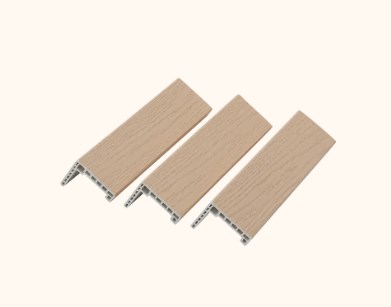
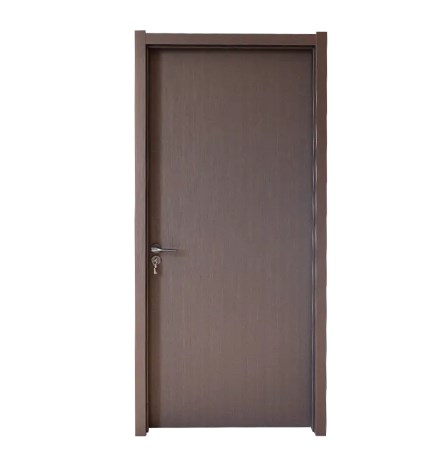
When evaluating materials for interior wall and ceiling coverings, PVC panels stand out as the most practical, cost-effective, and durable solution available. Unlike traditional materials that require extensive maintenance, specialized labor, and ongoing upkeep, PVC panels offer a waterproof, easy-to-install, and highly versatile alternative. PVC panels can last for decades without rotting, warping, or fading, making them the definitive choice for both high-moisture commercial environments and everyday residential living spaces. By combining the aesthetic appeal of wood or stone with the resilience of advanced polymers, this material eliminates the common compromises builders and homeowners usually face.
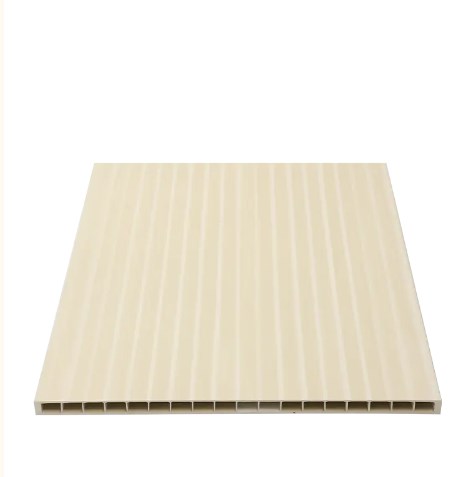
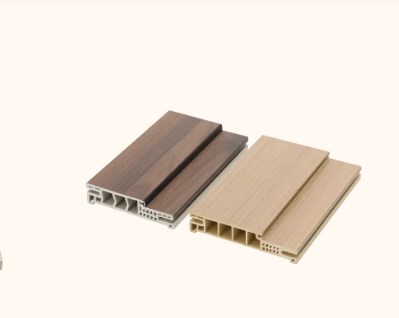
To fully appreciate the value of this material, it is essential to understand what it is and how it is made. PVC stands for polyvinyl chloride, a synthetic plastic polymer that becomes incredibly rigid and durable when combined with specific chemical stabilizers and additives. In the context of wall and ceiling cladding, the manufacturing process involves extruding this compound into hollow-core profiles or solid sheets, depending on the intended structural application.
The hollow-core design is particularly advantageous because it provides excellent thermal and acoustic insulation while keeping the overall weight remarkably low. The surface of the panel is typically treated with high-resolution printing technology to mimic natural materials, and then sealed with a transparent wear layer. This top layer is what gives the PVC panel its resistance to scratches, UV fading, and chemical spills. Because the color and pattern are integrated throughout the top layer rather than just painted on, the aesthetic integrity remains intact even after years of heavy use.
The most critical advantage of choosing PVC panels over alternatives like drywall, wood, or even ceramic tiles is their absolute water resistance. In areas where humidity levels consistently remain high, traditional building materials inevitably fail. Drywall absorbs moisture, leading to dangerous mold growth and structural crumbling. Wood swells, warps, and eventually rots. Even grouted tiles can harbor mold in the porous grout lines if not meticulously maintained.
A PVC panel features a completely non-porous surface. Water cannot penetrate the material, meaning it will not swell, distort, or provide a breeding ground for fungal spores. Unlike drywall, which can harbor mold within days of water exposure, PVC panels have a zero-percent water absorption rate. This characteristic makes them the standard choice for environments that are routinely exposed to direct water contact, such as commercial kitchens, public restrooms, laundry facilities, swimming pool enclosures, and residential bathrooms. Cleaning these surfaces requires nothing more than a damp cloth and standard household cleaners, drastically reducing the time and money spent on sanitation.
The physical weight of a building material directly impacts the complexity and cost of its installation. Heavy materials like ceramic tiles, natural stone, or even thick wooden planks require structural reinforcement, specialized mounting adhesives, and multiple laborers to handle safely. PVC panels fundamentally change this dynamic by being exceptionally lightweight.
Because of their low weight, a single individual can easily handle, measure, and install large panels without requiring heavy lifting equipment or additional labor. The installation process itself is designed for maximum efficiency. Most PVC panels utilize a tongue-and-groove interlocking system along the edges. This allows the panels to seamlessly click together, hiding the fastening mechanisms and creating a uniform, gap-free surface. They can be directly attached to existing wall substrates—including old tiles, plaster, or drywall—using construction adhesive, nails, or staples. The tongue-and-groove interlocking system can reduce installation time by more than half compared to traditional ceramic tiling, resulting in significant savings in professional labor costs. Furthermore, the lack of dust, grout mixing, and wet saws means the renovation area remains much cleaner during the construction process.
Beyond merely covering a surface, a well-chosen interior cladding can actively improve the environmental comfort of a room. The hollow-core structure of a standard PVC panel acts as a thermal break between the interior room and the exterior wall or ceiling cavity. By trapping small pockets of air within its profile, the material slows down the transfer of heat. In practical terms, this means rooms retain their warmth during colder months and stay cooler during hotter periods, easing the burden on climate control systems and lowering energy consumption.
Acoustically, these panels also offer meaningful improvements over rigid, flat surfaces like bare drywall or glass. The slight flexibility of the polymer material, combined with the hollow chambers, helps to absorb and dampen sound waves rather than reflecting them entirely. While they will not replace dedicated acoustic panels in a recording studio, they are highly effective at reducing the hollow echoing effect often found in large hallways, commercial spaces, or rooms with hard flooring. This results in a more pleasant, quieter ambient environment.
In any building, the long-term cost of a material is not just determined by its purchase price, but by the resources required to keep it looking functional and clean over its lifespan. Maintenance is an area where PVC panels drastically outperform almost every other interior finishing option.
The non-porous surface repels dirt, grease, and stains. In a kitchen environment, where grease splatters are a constant issue, PVC wall panels can be wiped down in seconds without the need for harsh abrasive scrubbers that would damage paint or varnish. In healthcare facilities, schools, or public restrooms, maintaining strict hygiene standards is non-negotiable. The smooth surface of a PVC panel prevents bacteria and viruses from settling into microscopic cracks. Maintenance efforts are reduced to simple wiping, eliminating the need for periodic repainting, regrouting, or resealing. This chemical resistance also means that strong commercial disinfectants will not bleach, discolor, or degrade the surface of the panels over time.
There is a persistent misconception that synthetic wall coverings look overly plastic or artificial. Modern manufacturing techniques have completely invalidated this assumption. Today, PVC panels are available in a staggering array of designs, ranging from flawless white matte finishes for sterile environments to hyper-realistic reproductions of natural oak, marble, slate, and concrete. The embossing on the surface of high-quality panels matches the printed pattern perfectly, meaning a wood-grain panel not only looks like wood but feels like wood when you run your hand across it.
This design versatility allows PVC panels to be used across a vast spectrum of interior styles. They are equally suited for a minimalist, modern bathroom as they are for a rustic farmhouse kitchen. They can be installed vertically to make a room appear taller, or horizontally to make it feel wider. Beyond walls, these panels are extensively used on ceilings to hide unsightly ductwork, pipes, and electrical cables, providing a finished, polished look without the need for a drop ceiling grid. They are also frequently used as wainscoting in hallways and dining rooms to protect the lower half of the wall from chair bumps and scuff marks.
Safety is a paramount concern in any construction material, and it is important to address the fire resistance of PVC. Pure polyvinyl chloride is inherently flame-retardant due to its chlorine content; it will not support combustion on its own. When exposed to a direct flame, a PVC panel will self-extinguish once the external flame source is removed. Furthermore, modern building codes require interior cladding materials to meet strict fire rating standards, and high-quality panels are manufactured to be classified as low-flame-spread and low-smoke-generating materials. This means that in the unlikely event of a fire, they will not rapidly accelerate the spread of flames or produce overwhelming amounts of toxic smoke compared to many untreated organic materials.
From an environmental perspective, the longevity of PVC panels plays a significant role in their sustainability profile. Because they do not need to be replaced, repainted, or treated with chemical preservatives over a multi-decade lifespan, they consume fewer resources in the long term. Additionally, at the end of their life cycle, PVC is a highly recyclable thermoplastic. It can be ground down and re-extruded into new products, keeping it out of landfills. The manufacturing process itself has become increasingly efficient, with many producers implementing closed-loop water systems and capturing excess heat for reuse.
When evaluating the financial viability of a building project, it is crucial to look beyond the initial price tag of the raw materials. The true cost of any wall or ceiling covering is the sum of the material price, the substrate preparation, the installation labor, and the lifetime maintenance costs. When viewed through this comprehensive lens, PVC panels represent one of the most economically efficient choices on the market.
To illustrate this clearly, consider how a PVC panel compares to other common materials across the key stages of a renovation project:
| Material | Substrate Prep | Installation Speed | Ongoing Maintenance |
|---|---|---|---|
| Ceramic Tile | Heavy (Cement board required) | Slow (Grouting and curing time) | High (Grout sealing, mold removal) |
| Painted Drywall | Moderate (Taping, mudding, sanding) | Moderate (Multiple coats with drying time) | serious (Repainting, patching damage) |
| Natural Wood | Moderate (Framing and moisture barrier) | Slow (Precision cutting and finishing) | Very High (Sanding, staining, sealing) |
| PVC Panel | Minimal (Can go over existing surfaces) | Fast (Interlocking, no drying time) | Very Low (Simple surface wiping) |
As the table demonstrates, while the raw cost of a PVC panel might be similar to mid-range ceramic tiles, the elimination of heavy substrate preparation, the rapid installation process, and the near-zero maintenance requirements result in a drastically lower total cost of ownership.
Achieving a flawless, long-lasting finish with PVC panels requires adhering to a few fundamental installation principles. While the process is forgiving compared to tiling, neglecting basic preparation can lead to unsightly results.
Like many synthetic and natural materials, PVC expands and contracts slightly in response to temperature fluctuations. Before installation, the panels should be placed flat in the room where they will be installed for a period of at least 24 hours. This allows the material to acclimate to the room's ambient temperature and humidity, preventing sudden expansion or contraction after they are permanently fixed to the wall.
Even after acclimation, seasonal temperature changes will cause slight movement. When measuring and cutting the first and last panels in a row, it is critical to leave a small gap—typically a fraction of an inch—at the junctions where the panels meet the floor, ceiling, and corners of the room. These gaps are later hidden by trim pieces such as corner moldings, baseboards, and crown moldings. Failing to leave these expansion gaps can cause the panels to buckle or warp against the immovable boundaries of the room when they naturally expand.
The choice between using adhesives or mechanical fasteners depends on the existing wall substrate. For relatively smooth, flat, and clean surfaces like existing drywall or old tiles, a high-quality construction adhesive applied in a vertical zigzag pattern provides a secure, invisible bond. For uneven or porous walls, a combination of both is often recommended: applying adhesive to the back of the panel while also using small nails or staples at the top lip of the tongue-and-groove joint. It is crucial to never fasten through the visible face of the panel, and to avoid driving nails too tightly, which restricts the natural movement of the material.
The unique combination of properties offered by PVC panels makes them suitable for a wide variety of specific applications that would challenge traditional materials. Understanding where they perform best helps architects, contractors, and homeowners make informed decisions.
While the advantages of PVC panels are extensive, no building material is entirely without limitations. A practical approach requires acknowledging these drawbacks and understanding how to properly mitigate them during the planning and installation phases.
While PVC is self-extinguishing and flame-retardant, its structural integrity can be compromised by continuous, intense direct heat. If installed too closely to a freestanding gas stove, a radiant heater, or the exhaust flue of a solid-fuel fireplace, the material can begin to soften, warp, or discolor. The mitigation for this is straightforward: maintain a safe clearance distance between any high-heat source and the PVC cladding, adhering strictly to local fire safety codes and the manufacturer's specified heat tolerances.
Although the hollow-core design offers some acoustic dampening, PVC panels are fundamentally lightweight and thin compared to specialized acoustic materials like mass-loaded vinyl or multiple layers of sound-drywall. If the primary goal of a renovation is to achieve complete soundproofing between two adjacent rooms, PVC panels alone will not be sufficient. In such cases, the panels should be used as the finished aesthetic layer, installed over a dedicated acoustic insulation framework containing mineral wool and resilient channels.
While the wear layer on modern panels is highly resistant to daily wear, PVC is a thermoplastic and can be gouged or scratched by sharp, heavy objects. In high-traffic commercial areas where heavy equipment is moved, the lower sections of the wall may be susceptible to impact damage. This is easily mitigated by installing rigid PVC or metal corner guards and heavy-duty baseboards in vulnerable zones, protecting the primary wall panels from accidental contact.
As the construction industry continues to pivot toward faster, cleaner, and more sustainable building practices, the role of advanced synthetic materials like PVC panels will only continue to expand. The days of spending weeks on messy, labor-intensive tiling and plastering projects are rapidly coming to an end for many standard interior applications. Builders and designers are increasingly prioritizing materials that offer immediate usability after installation—rooms clad in PVC panels can be returned to service immediately, as there is no grout to cure, no paint to dry, and no volatile organic compounds to off-gas into the air.
Furthermore, innovations in digital printing and polymer chemistry are continuously expanding the aesthetic boundaries of what these panels can achieve. We are seeing the introduction of panels with integrated antimicrobial agents baked directly into the polymer matrix, as well as textured surfaces that are virtually indistinguishable from raw architectural concrete or reclaimed timber. The shift toward advanced polymer cladding represents a permanent evolution in interior construction, prioritizing long-term resilience and hygienic practicality over traditional, high-maintenance methods. By understanding the proper selection, installation, and application of PVC panels, anyone undertaking a construction or renovation project can achieve a superior, long-lasting result with significantly less frustration and lower overall expense.

 English

 English
 عربى
عربى Español