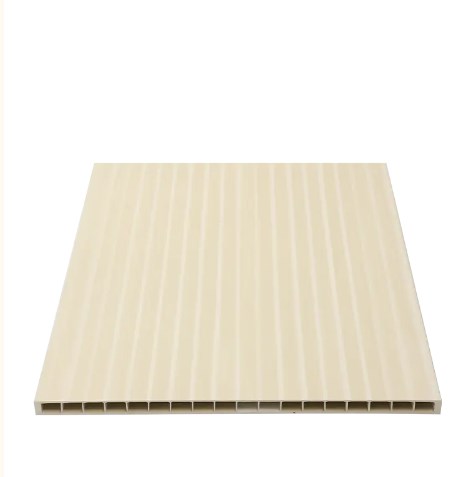
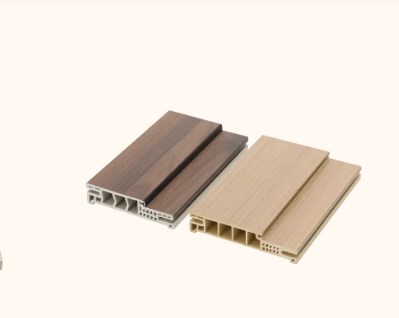
PVC cable tray is a cost-effective, corrosion-resistant, lightweight, and electrically insulated cable management solution, widely used in industrial, commercial, and residential construction projects. It is the optimal choice for cable routing in humid, corrosive, and low-voltage environments, with stable performance, easy processing, and long service life, fully meeting the daily wiring and protection needs of various scenarios.
Compared with metal cable trays, PVC cable trays eliminate the risk of electric leakage and rust, require no anti-corrosion coating treatment, and have lower transportation and installation costs. It is not a specialized product for ultra-high-temperature or heavy-load scenarios, but it fully meets the application standards of most conventional construction and electrical projects, and has become one of the most commonly used cable tray types in the global construction and electrical industries.
PVC cable tray is manufactured from rigid polyvinyl chloride engineering material, which is modified and reinforced to enhance its physical and chemical stability. This material endows the cable tray with a series of unique properties that distinguish it from traditional metal and fiberglass cable trays, forming its core competitiveness in the market.
The most prominent advantage of PVC cable tray is its strong resistance to chemical corrosion. It will not react with acid, alkali, salt, oil, and other corrosive substances, and will not rust, peel, or deteriorate even in long-term exposure to corrosive environments. Its service life in corrosive environments is more than 3 times that of galvanized metal cable trays, which greatly reduces the frequency of replacement and maintenance.
PVC is a natural insulating material with high insulation strength, which can effectively prevent current leakage, short circuit, and electric shock risks. Unlike metal cable trays that need additional insulation treatment, PVC cable trays have inherent insulation performance, which improves the safety of cable laying and is very suitable for low-voltage power distribution, communication, and control cable systems.
PVC cable tray is 40%-60% lighter than steel cable trays of the same specification, which greatly reduces the load-bearing pressure of buildings and simplifies the transportation and handling process. At the same time, the modified rigid PVC material has good compressive and bending resistance, and can maintain a stable structural shape under conventional load and installation conditions without deformation or breakage.
Standard PVC cable trays are equipped with a flame-retardant formula, which can self-extinguish from fire and prevent the spread of flames, complying with mainstream fire protection standards for construction and electrical projects. Its low thermal conductivity can also reduce the impact of external temperature changes on internal cables, keeping the cable operating environment relatively stable.
PVC cable trays are divided into multiple structural types according to application scenarios and wiring requirements, each with unique design advantages to adapt to different laying environments and cable capacities. The structural design follows the principles of practicality, ventilation, and easy maintenance, ensuring efficient cable management.
Ladder-type PVC cable tray adopts a ladder-like frame structure with high ventilation performance, which is conducive to heat dissipation of power cables. It is suitable for laying large-diameter power cables and is commonly used in industrial plants, power distribution rooms, and outdoor cable routing. The open structure also makes cable inspection and maintenance more convenient.
Solid bottom PVC cable tray has a fully enclosed bottom plate, which can provide all-round protection for cables, prevent dust, moisture, and mechanical damage. It is suitable for communication cables, control cables, and cables laid in humid and dusty environments, such as basements, laboratories, and food processing plants.
This type combines the advantages of ladder type and solid bottom type, with evenly distributed ventilation holes on the bottom plate, balancing heat dissipation and protection performance. It is the most widely used general-purpose type, suitable for mixed laying of power cables and control cables, and compatible with most commercial and industrial construction scenarios.
Complete PVC cable tray systems are equipped with matching accessories to ensure the integrity and stability of the wiring system. Common accessories include elbows, tees, cross joints, reducing joints, end caps, fixing brackets, and connecting pieces. All accessories are made of the same PVC material, ensuring consistent performance and unified appearance.
To better understand the application value of PVC cable tray, we compare it with two mainstream cable tray materials (steel and fiberglass) from multiple dimensions, and its comprehensive advantages in conventional scenarios are very obvious.
| Performance Index | PVC Cable Tray | Steel Cable Tray | Fiberglass Cable Tray |
|---|---|---|---|
| Corrosion Resistance | Excellent | Poor | Good |
| Electrical Insulation | Excellent | None | Good |
| Weight | Light | Heavy | Medium |
| Cost | Low | Medium | High |
The overall cost of PVC cable tray is 30%-50% lower than that of steel cable trays, including material cost, processing cost, transportation cost, and installation cost. It does not require later anti-corrosion, painting, or rust removal maintenance, which further reduces the full-life-cycle cost of the project, making it the first choice for budget-limited projects.
PVC cable tray can be cut, drilled, and connected on-site with ordinary tools; no professional welding or cutting equipment is needed. The lightweight design allows single-person installation for small-specification products, which shortens the construction period and reduces labor input. Metal cable trays require professional tools and operators, and the installation efficiency is significantly lower.
PVC cable tray will not rust, corrode, or deform, and only needs regular cleaning of surface dust in daily use; no special maintenance measures are required. Steel cable trays need regular anti-corrosion treatment and rust repair, and fiberglass cable trays have high maintenance costs, while PVC products have obvious advantages in later operation and maintenance.
PVC cable tray is widely used in various fields, relying on its excellent performance and cost advantages, covering almost all conventional cable laying scenarios except high-temperature and heavy-load special environments. The following are the most mainstream application fields and specific usage scenarios.
In office buildings, shopping malls, hotels, schools, and hospitals, PVC cable tray is used for power distribution, lighting wiring, network communication cable laying, and fire protection system cable routing. Its insulation performance ensures the safety of electrical systems in densely populated areas, and the clean appearance is compatible with the interior decoration style of buildings.
It is suitable for chemical plants, food processing plants, textile mills, and pharmaceutical factories with corrosive gases or liquids. More than 60% of corrosive industrial environments choose PVC cable tray to replace metal products, solving the problem of rapid corrosion and damage of metal cable trays. It is also used for cable management of production equipment and automated production lines.
In residential quarters, PVC cable tray is used for public area lighting, monitoring systems, and community distribution cabinet wiring. In infrastructure such as subway stations, light rail stations, and underground pipelines, its moisture-proof and corrosion-resistant characteristics adapt to the humid underground environment, ensuring long-term stable operation of cables.
PVC cable tray can be used for outdoor cable laying with sun protection and rain protection treatment, suitable for parking lots, courtyard lighting, and outdoor equipment wiring. It is also widely used in aquaculture farms, coastal areas with high salt spray, and other environments that require high corrosion resistance, with a service life far exceeding that of metal materials.
Standardized installation is the key to ensuring the long-term stable operation of PVC cable tray. The installation process is simple, but it needs to follow basic specifications to avoid structural deformation, cable damage, and system instability caused by improper operation.
The fixing spacing of PVC cable tray should be controlled within a reasonable range to avoid excessive spacing, causing middle sagging. When laying cables, do not exceed the rated load of the cable tray, and separate strong and weak current cables if necessary. Avoid long-term direct exposure to ultra-high temperature sources during installation to prevent material softening and deformation.
PVC cable tray is a maintenance-free product for most scenarios, and simple daily care can greatly extend its service life. Under normal use environment, the service life of PVC cable tray can reach more than 20 years, which is much longer than that of ordinary galvanized steel cable trays.
Regularly wipe the surface dust and dirt with a dry or damp cloth; no corrosive cleaning agents are needed. Check the connecting fasteners every six months to ensure they are not loose, and check whether the cable tray is deformed or damaged. For outdoor use, regularly check the sun protection and rain protection facilities to avoid long-term direct ultraviolet radiation.
In corrosive environments, regularly check the surface condition of the cable tray to ensure no chemical corrosion. In humid environments, pay attention to the drying of the cable tray interior to prevent moisture from affecting cable performance. In low-temperature environments, PVC material remains stable, and no special maintenance is required.
Long-term exposure to ultra-high temperature, strong ultraviolet radiation, and heavy-load overload use will shorten the service life of PVC cable tray. Standardized installation and correct use can avoid these adverse factors and give full play to the service life advantage of PVC materials.
While PVC cable tray has many advantages, it also has clear performance limitations, and it is very important to clarify its non-applicable scenarios to avoid project quality problems caused by improper selection.
PVC cable tray is not suitable for high-temperature environments above the rated temperature, and cannot be used for ultra-heavy-duty large-diameter cable laying. It is not recommended for special projects requiring high fire resistance and explosion-proof performance. In these scenarios, metal or fiberglass cable trays with special performance should be selected.
Select PVC cable tray when the environmental temperature is conventional, corrosion resistance and insulation are required, and the project budget is limited. For high-temperature, heavy-load, and ultra-high fire protection requirements, choose professional cable trays that meet the performance indicators. Correct selection based on actual needs can maximize the value of PVC cable tray.
To sum up, PVC cable tray is a high-cost-performance cable management solution with excellent corrosion resistance, electrical insulation, lightweight, and low cost as its core advantages, suitable for most conventional commercial, industrial, and residential cable laying scenarios. Its standardized installation and maintenance-free characteristics reduce the comprehensive cost of the project and improve the safety and stability of the electrical system.
With the development of the global construction and electrical industry, the demand for lightweight, corrosion-resistant, and environmentally friendly cable management products is increasing. PVC cable tray will continue to expand its application scope with its unique performance advantages, and its material technology will be further upgraded to improve high-temperature resistance and structural strength, making it adapt to more complex scenarios.
For most engineering projects, PVC cable tray is the most practical and economical choice, which can fully meet the design and use requirements, and is an indispensable key product in the field of cable management. Understanding its characteristics, installation, and maintenance methods can help project designers and constructors make better selection and application decisions.

 English

 English
 عربى
عربى Español