Six months after a bathroom renovation, the MDF skirting in a 42 m2 apartment had swollen 5 mm at two doorways and needed to be cut out. The failure came not from standing water but from the cycle of condensation, floor-washing moisture, and humidity that any wet room generates. Moisture resistant WPC skirting is specified for exactly this condition: it keeps its dimensions, holds its joints, and does not bubble, peel, or soften at the floor line.
24-hour water absorption: moisture resistant WPC skirting below 0.3%. MDF skirting 16-25%. Solid wood skirting 8-15%.
Moisture resistant WPC skirting resists water because the continuous PVC matrix encapsulates the wood fiber and removes the interconnected pores that carry liquid through MDF or timber.
A typical wet-area WPC formulation runs 55-65% wood fiber, 28-38% PVC resin, and 4-7% coupling agents, stabilizers, and lubricants. The coupling agent bonds the hydrophobic plastic to the hydrophilic fiber, and the plastic phase envelops the wood bundles. Water molecules have no continuous route from the visible face into the core. Small amounts of absorbed moisture evaporate before they produce measurable swelling.
Density is a reliable quality proxy. Profiles with a density of 1.0-1.3 g/cm3 are produced for bathrooms, kitchens, and coastal rooms, usually with a coextruded skin that further reduces permeability. Profiles at 0.6-0.8 g/cm3 are acceptable for bedrooms but depend more on the paint or coating for moisture protection. Manufacturers such as Jiangyin Gwing Technology Co., Ltd. (gtwpc.com) compound their WPC in a factory-controlled process with batch-level density and absorption documentation.
Core definition: WPC skirting is a wood-plastic composite trim profile made from wood flour, PVC resin, and additives, extruded under heat and pressure. Its moisture resistance comes from the polymer phase isolating wood particles from liquid water.
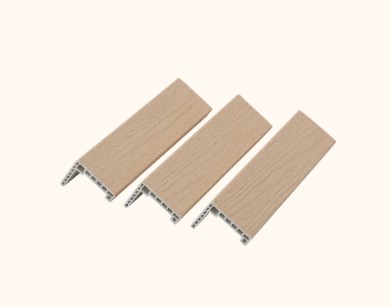
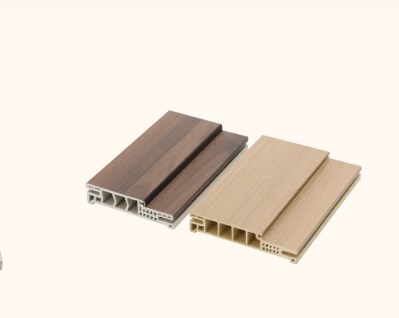
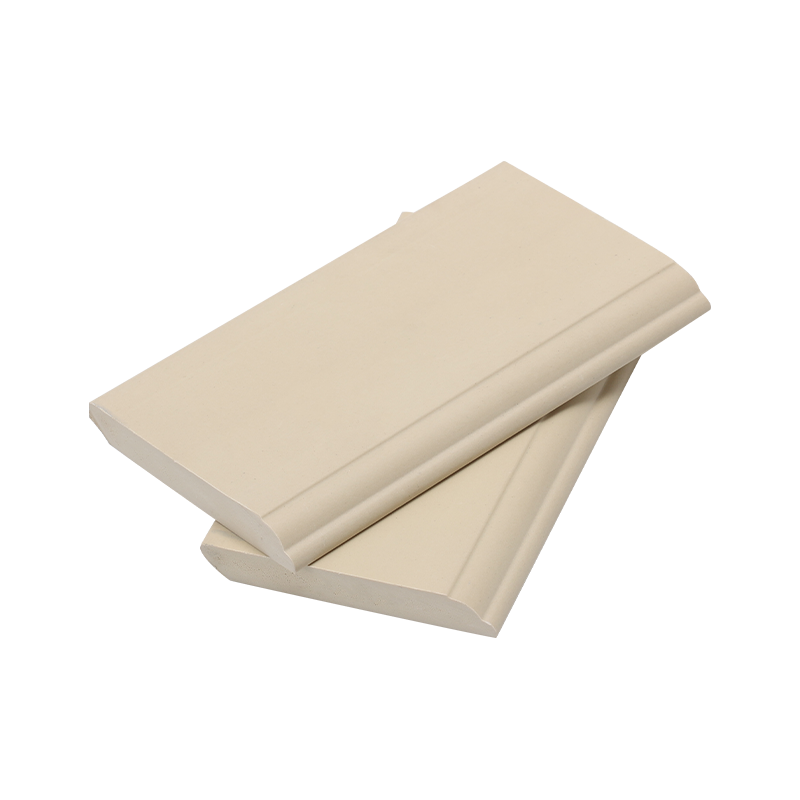 Moisture-Resistant WPC Skirting for Humid RoomsThis WPC skirting is engineered with thermoplastics and wood fiber to resist moisture, mold, and rot, making it a practical choice for bathrooms, kitchens, and coastal areas where humidity is a concern.View Product →
In wet rooms, moisture resistant WPC skirting outperforms MDF, plywood, and solid wood on every measurable failure mode, and the differences are visible after a single humidity cycle.
A bathroom with an enclosed shower and no mechanical ventilation can hold 85% relative humidity for several hours. Under that exposure, wood-based profiles take up moisture in the first 30-60 minutes. WPC profiles remain within 0.1 mm of their original dimensions under the same condition.
| Material | 24h water absorption | Thickness swell | Mold risk | Wet-room service life |
| WPC | <0.3% | <0.5% | Low | 10+ years |
| MDF | 16-25% | 10-15% | High | 2-4 years |
| Solid wood | 8-15% | 4-8% | Medium | 3-6 years |
| PVC | <0.1% | <0.1% | None | 15+ years |
Estimated service life of skirting materials in a ventilated bathroom (years)
Because the surface stays sealed after the composite is extruded, WPC also removes the microbial food source that appears when MDF swells. Those environmental and moistureproof advantages translate into fewer material replacements and less renovation waste over the life of a room.
Choose moisture resistant WPC skirting by density, surface layer, and dimensional tolerance, not by wood-grain color.
Color and texture take five minutes to decide. The specification that protects a project depends on how the profile is built:
| Exposure | Recommended density | Surface | Fixing note |
| Dry interior | 0.7-0.9 g/cm3 | Painted or coated | Clip or adhesive |
| Bathroom / kitchen | 1.0+ g/cm3 | Coextruded PVC skin | Hidden clip + sealant |
| Coastal / ground floor | 1.1+ g/cm3 | Full-coverage coextrusion | Raised above floor finish |
Selection shortcut: buy from a manufacturer that publishes per-batch absorption values. A product sheet showing 24h water absorption below 0.3% and thickness swell below 0.5% is more useful than a marketing claim of "waterproof" trim.
Non-standard heights, curved walls, and retrofit profiles are common when old plaster has been patched. Custom WPC skirting production avoids field joints that become moisture entry points, because each run can be matched to the exact wall height and corner geometry.
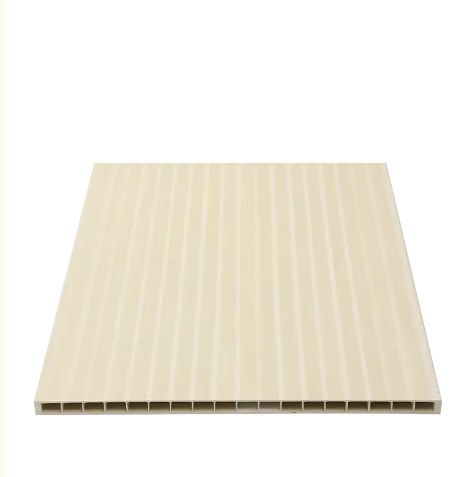
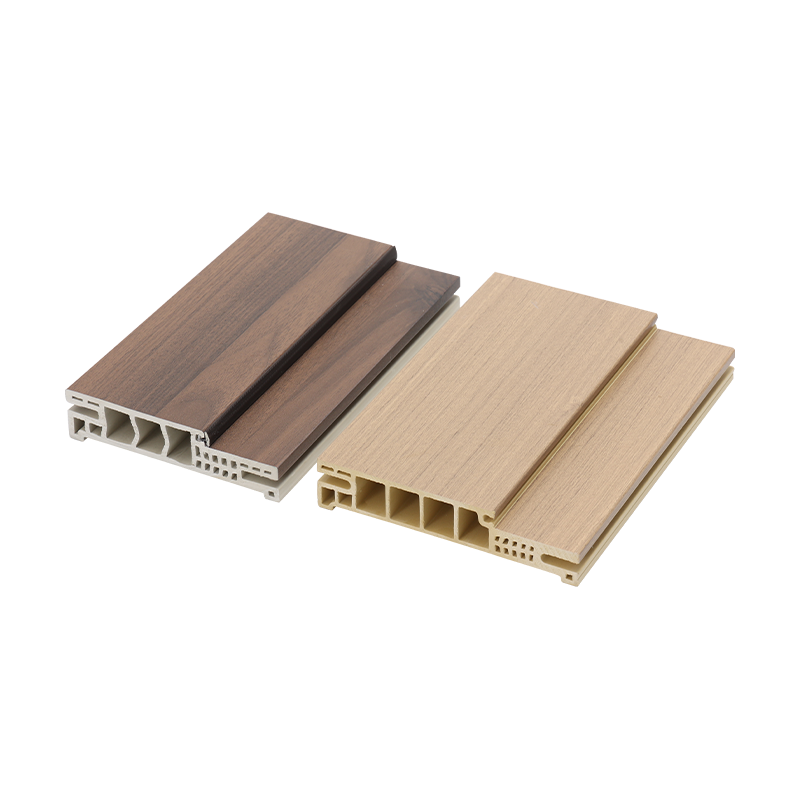 Custom WPC Skirting for Non-Standard WallsTailor-made WPC skirting profiles fit exact wall heights and corner geometries, reducing field joints that can trap moisture. Ideal for retrofit projects, curved walls, or patched plaster surfaces.View Product →
Installation quality, not the material formula, determines whether moisture resistant WPC skirting reaches its rated service life.
The composite stops water from moving through the face of the profile, but a sawn end or a screw hole exposes the wood-polymer interface. The proven sequence is:
Dry and prime the substrate
Keep wall moisture below 12% and apply a damp-proof primer before fixing the profile.
Seal every cut end
Brush a transparent acrylic or modified-silane sealer on all sawn surfaces, especially at thresholds.
Leave expansion gaps
Maintain 2-3 mm between profile lengths and fill internal corners with flexible mold-resistant sealant.
Fix with hidden clips
Space clips no more than 300 mm apart; if adhesive is the only option, run a full-length adhesive bead along the back edge to seal the cavity.
Seal top and bottom seams
Apply a thin line of hygienic silicone along the joint with the floor to stop mopping water from rising behind the profile.
A real failure example: dense WPC skirting was installed with sealed faces but unsealed miter cuts. Ten months later, the corners swelled 0.6 mm and showed white spotting where moisture entered through the open cut ends. Sealing the cuts would have prevented both symptoms.
A complete walk-through of the wall preparation and fixing options appears in the guide on how to install WPC skirting on interior walls.
Moisture resistant WPC skirting retains its dimensions for more than a decade in occupied bathrooms when the substrate is dry and the cuts are sealed.
In coastal residential projects, high-density WPC profiles kept joint alignment and surface structure after eight years of continuous humidity exposure, while MDF profiles in comparable corridors failed within 26 months. For contractors who cover warranty labor, the difference is often the reason a specification switches from wood-based trim to WPC.
When the skirting is installed at the same time as the door assembly, matching a WPC skirting line with a WPC door frame keeps the entire doorway at the same moisture performance level instead of creating a moisture gradient between dissimilar materials.
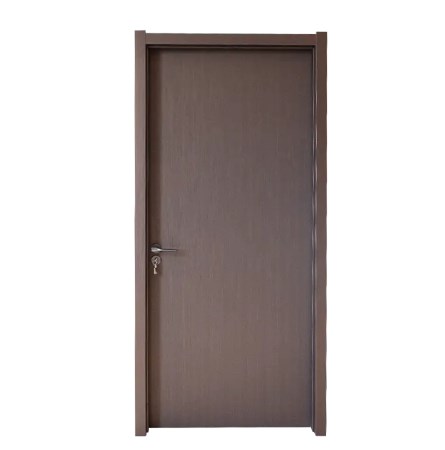
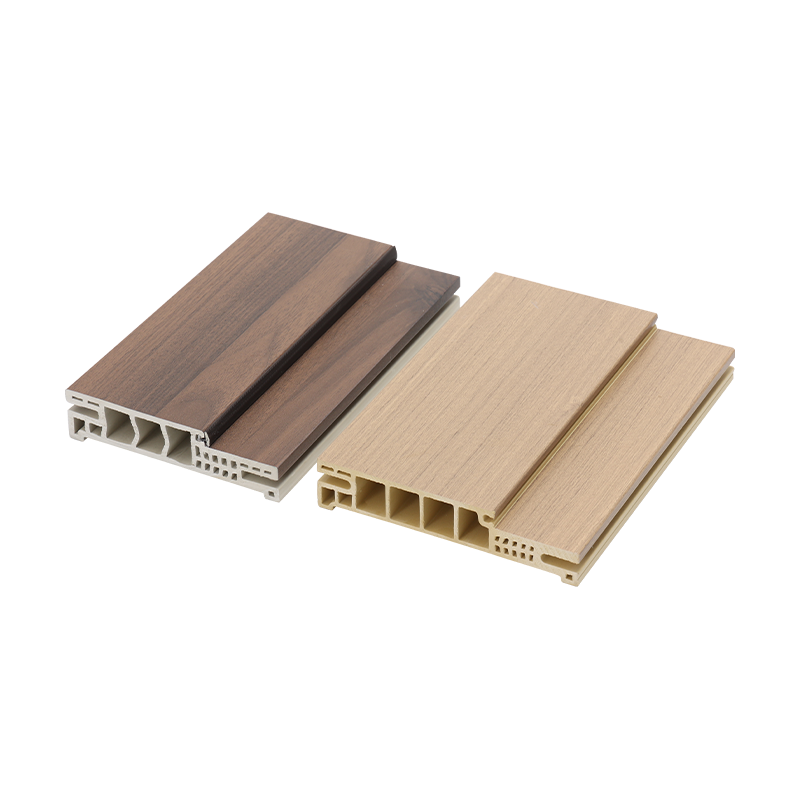 WPC Door Frame with Waterproof PerformanceThis WPC door frame combines resin and wood fiber for moisture resistance and durability, matching the skirting line to prevent moisture gradients around doorways in wet areas.View Product →
The answers below are based on standardized immersion tests and field observations from wet-room installations.
Yes, but only when the wall moisture is below 12% at the time of installation. WPC resists room-side humidity, while a wet substrate keeps the back face of the profile at high relative humidity and can force moisture through unsealed fixing holes.
No. The thermoplastic matrix of WPC leaves no continuous wood fiber network for mold to consume. Surface mildew may grow on dust if the profile stays damp, but it wipes off without attacking the material.
Hollow profiles can be moisture resistant when the wall thickness is at least 3 mm, but the interior channel can hold condensate in bathrooms. Solid or foam-core profiles are preferred where moisture is persistent.
Yes. A saw cut exposes fresh wood-polymer interface that absorbs moisture much faster than the coextruded face. Seal all cut ends with a transparent sealer; this takes less than a minute per piece and prevents the most common cause of corner swelling.

 English

 English
 عربى
 Español