When specifying interior doors for residential or commercial projects, the choice between WPC (Wood-Plastic Composite) doors and solid wood doors comes down to a set of practical trade-offs that affect performance, cost, maintenance, and suitability for the specific environment the door will serve. Neither material is universally superior — each performs better than the other in different conditions — but understanding exactly where each material's strengths and limitations lie makes it straightforward to select the right specification for each application.
This guide provides a direct technical comparison of WPC doors and solid wood doors across the dimensions that matter most to buyers, architects, contractors, and facility managers: material composition, moisture resistance, durability, acoustic and thermal performance, maintenance, environmental credentials, and total cost over the product's service life.
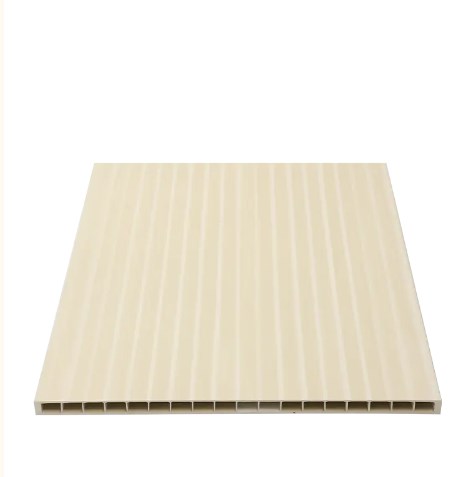
A WPC door (also called a Full WPC door or wood-plastic composite door) is manufactured from a composite material combining wood fiber or wood flour — the plant-based component that contributes natural texture and rigidity — with PVC or polyethylene resin — the polymer component that provides waterproofing, dimensional stability, and resistance to biological attack. The two components are blended at high temperature, extruded or molded into door panels, frames, and components, and finished with a surface layer that can replicate wood grain textures, smooth paint finishes, or other aesthetic treatments.
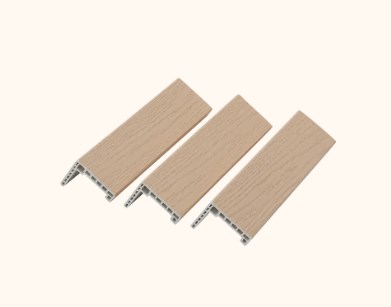
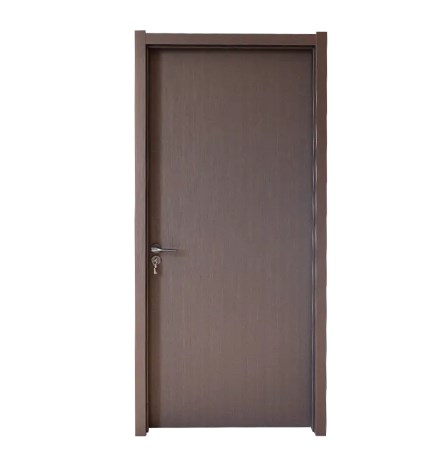
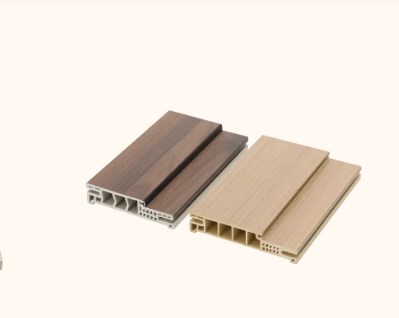
In a Full WPC door system, the door panel, door frame, door architrave, and skirting are all manufactured from WPC composite material, creating a complete installation system where every component shares the material's waterproof and maintenance-free properties. This is distinct from doors that use WPC only for the panel face skin over a different core material.
A solid wood door is manufactured with a core of solid timber — typically hardwood species such as oak, pine, mahogany, teak, or poplar — either as a single-piece solid plank construction or (more commonly in modern production) as a finger-jointed or laminated solid wood core that achieves the stability benefits of engineered timber while using timber resources more efficiently. Solid wood doors are distinct from hollow-core doors (which use a lightweight internal framework with thin face veneers) and engineered wood doors (which use HDF or MDF facing over a timber or composite core).
Solid wood doors are valued for their natural appearance, workability, acoustic mass, and the perception of quality and warmth associated with natural timber in high-end residential and hospitality applications.
| Property | WPC Door | Solid Wood Door |
|---|---|---|
| Material composition | Wood fiber + PVC/PE resin composite. No solid timber. | Solid hardwood or softwood timber, or finger-jointed solid wood core. |
| Moisture resistance | Excellent. PVC resin content makes WPC highly resistant to moisture absorption. Will not swell, warp, or delaminate in humid environments. Suitable for bathrooms, kitchens, and basements. | Poor to moderate. Solid wood absorbs and releases moisture with changes in ambient humidity. Expands in high humidity and contracts in dry conditions. Prone to warping, swelling, and sticking in bathrooms and kitchens without careful specification and finishing. |
| Dimensional stability | High. WPC maintains stable dimensions across humidity ranges that cause solid wood to move significantly. Door fit and hardware alignment remain consistent year-round. | Moderate. Solid wood moves with seasonal and daily humidity changes. Doors can stick in summer and develop gaps in winter. Requires careful joinery tolerances and regular maintenance of seals and finishes to manage movement. |
| Resistance to rot and insects | Excellent. The PVC polymer component provides inherent resistance to rot fungi, mold, and wood-boring insects. WPC doors do not rot, mold, or become termite food. | Variable. Susceptibility depends on timber species (teak and cedar are naturally resistant; pine is highly susceptible) and the condition of protective finishes. Damaged or unfinished areas of solid wood doors in humid environments will eventually support fungal decay and can be attacked by termites and wood-boring insects. |
| Surface finish durability | Factory-applied surface finish (typically a foil wrap, painted finish, or UV-cured coating) is durable and does not require periodic refinishing. Surface is scratch-resistant and easy to clean. Does not require painting, staining, or varnishing during service life. | Natural wood beauty when freshly finished. However, painted or varnished solid wood surfaces require periodic refinishing as the paint or varnish breaks down — typically every 3–7 years for interior doors in normal residential use, sooner in high-traffic or high-humidity applications. |
| Acoustic performance | Good sound insulation for standard interior applications. Acoustic performance depends on door mass and panel construction. Multi-chamber WPC panels can achieve competitive sound reduction for standard room-to-room isolation. | Advantage for solid wood. The acoustic mass of a solid timber door core generally provides better sound insulation than hollow or lightweight WPC constructions of equal thickness. For applications with high acoustic performance requirements (recording studios, hotel rooms, conference rooms), solid wood or specialist acoustic doors are typically specified. |
| Thermal performance | The composite structure and any internal chamber design provide moderate thermal resistance. For interior doors (not building envelope), thermal performance is rarely a primary specification criterion. | Solid wood has good natural thermal insulation due to timber's inherently low thermal conductivity. Again, relevant primarily for external doors — for interior doors in conditioned spaces, the thermal performance difference between WPC and solid wood is marginal in practice. |
| Aesthetic options | Wide range of factory-applied surface finishes: solid colors, wood-grain foil wraps, high-gloss finishes, matte finishes, embossed textures. Modern WPC door surface finishes convincingly replicate premium wood grain appearances at the point of sale. Less suitable for applications requiring the natural variation and depth of real wood grain visible in clear-finished solid timber. | Authentic natural wood grain, figure, and variation that cannot be fully replicated by surface printing or foil. Clear-finished solid timber doors in premium hardwood species (oak, walnut, teak) have a natural aesthetic depth and warmth valued in high-end residential, boutique hospitality, and luxury commercial applications. |
| Environmental credentials | Uses wood fiber (can include recycled wood waste) and PVC resin. Reduces demand for virgin solid timber. Environmental profile depends on whether PVC production uses renewable energy and whether the product is recyclable at the end of life. Look for products with documented environmental certifications. | Natural renewable material is sourced from certified sustainable forestry (FSC or PEFC certified). High embodied energy in drying and processing. Longevity of solid wood doors (50+ years when well maintained) contributes positively to lifecycle environmental performance. Uncertified timber carries deforestation risk. |
| Installation | Full WPC door systems (door + frame + architrave all in WPC) are designed for efficient on-site assembly. WPC is lighter than solid hardwood at equivalent thickness, reducing handling effort. Can be cut and fitted with standard woodworking tools. | Heavier and more demanding to fit precisely. Solid wood door frames and sets require skilled joinery for quality installation. Site fitting and adjustment are needed for seasonal movement allowances. |
| Maintenance requirement | Very low. No painting, staining, or refinishing required. Clean with a damp cloth and mild detergent. Inspect and re-seal hardware fixings periodically. | Moderate to high. Periodic repainting, restaining, or revarnishing is required. Surface damage (scratches, dents) is more visible and harder to repair invisibly in clear-finished timber. Door fit adjustment may be required seasonally. |
| Typical price | Generally lower to mid-range. Full WPC door sets (door + frame + architrave) are cost-competitive with mid-grade solid wood door sets and significantly lower cost than premium hardwood solid doors. | Wide range: budget softwood doors at low cost; premium hardwood doors (solid oak, walnut) at significantly higher cost. Ongoing maintenance costs add to the total cost of ownership. |
| Recommended applications | Bathrooms, kitchens, laundry rooms, basements, coastal properties, tropical climates, rental properties, and hotel rooms requiring low maintenance, commercial and institutional facilities, and affordable housing developments. | High-end residential main entrance doors, premium living room doors, boutique hotel feature doors, heritage renovation requiring period-authentic materials, and applications where natural wood authenticity is a non-negotiable design requirement. |
Wet and humid rooms. Bathrooms, en-suites, and kitchens are the most common installation environment for WPC doors in residential construction, for exactly the reason the comparison table makes clear: solid wood doors in bathrooms are high-maintenance, prone to swelling and sticking, and eventually susceptible to paint failure and surface degradation from steam and moisture. A WPC door in a bathroom needs no special treatment, does not swell in summer humidity, and requires only normal cleaning for its entire service life. For residential developers and property managers responsible for large numbers of bathroom doors across multiple units, the maintenance cost difference between WPC and painted solid wood over 10 years is commercially significant.
Commercial, hospitality, and institutional projects. Hotels, serviced apartments, student accommodation, care homes, and commercial offices all share a requirement for doors that perform reliably under heavy use with minimal maintenance intervention. Full WPC door systems — where the door panel, frame, and all trim components are manufactured from the same composite material — deliver this reliability while offering the range of surface finishes (wood grain foils, solid colors, high gloss) that satisfy the aesthetic requirements of commercial interior design. The lower installation time of WPC door systems compared to solid timber door sets is also commercially valuable in large-scale fit-out projects where program efficiency matters.
Tropical, coastal, and high-humidity climates. In tropical climates where year-round high humidity and temperature swings cause solid wood doors to move significantly and where termite activity makes untreated timber a vulnerability, WPC doors' combination of dimensional stability, moisture resistance, and biological resistance makes them the practical specification choice. Coastal properties where salt air accelerates the degradation of surface finishes on timber doors present a similar case for WPC.
Premium aesthetic applications where natural timber authenticity is the design brief. A clear-finished solid oak or walnut door in a high-end residential living space or a luxury hotel lobby entrance has a natural beauty, depth, and warmth that WPC surface finishes — however well-executed — cannot fully replicate at the point of close inspection. For projects where the natural grain and figure of real wood are design requirements rather than simply an aesthetic preference, solid timber remains the appropriate specification.
High acoustic performance applications. Where sound transmission through interior doors is a genuine acoustic engineering concern — hotel room doors to corridors, recording studio control room doors, private meeting rooms — the acoustic mass of solid timber doors, particularly in thick solid hardwood construction, typically outperforms standard WPC door constructions. Specialist acoustic door manufacturers produce high-performance solid-core acoustic doors for these applications.
Heritage, conservation, and period property work. Renovation and restoration of period buildings where authentic materials are required by conservation guidelines or client brief, requires solid timber doors that match original construction methods and materials.
WPC doors have a solid, rigid feel that closely resembles timber at the point of touch — they are heavier than hollow-core doors and produce a solid sound when knocked, as solid wood does. The surface finish (wood-grain foil or texture coat) is visually convincing at normal viewing distances, though on close inspection, the regularity of the printed grain pattern differs from the natural variation of real timber. For the majority of residential and commercial applications, buyers and occupants find WPC doors indistinguishable from painted solid wood doors in normal use.
WPC doors installed in appropriate interior conditions (protected from direct weather exposure) have an expected service life of 15–25 years or more. The composite material does not rot, corrode, or degrade from moisture exposure. Practical end-of-life factors are typically surface finish wear in high-traffic applications, hardware wear, or facility redesign requirements rather than structural failure of the door itself. This service life compares favorably with solid wood interior doors, which require periodic refinishing to maintain their appearance and protective surface condition.
WPC doors are primarily specified for interior applications. While WPC material's moisture resistance is an advantage over solid timber, full external door applications subject WPC doors to direct weather exposure, UV radiation, and the full range of thermal cycling that occurs at building envelopes — conditions that require specific design, construction, and certification for external door use. For external applications, always confirm with the manufacturer that the specific WPC door product is rated and tested for external use, including UV resistance testing and relevant weather performance standards for your market.
Jiangyin Gwing Technology Co., Ltd., Jiangyin, Jiangsu, manufactures Full WPC Door systems — door panels, door frames, door architraves, and WPC skirting — from polymer composite materials developed over nearly 20 years of production experience. WPC doors are moisture-resistant, eco-friendly, dimensionally stable, and available in a wide range of colors, surface textures, and custom dimensions for residential, commercial, hospitality, and institutional applications. Full customization service from product consultation through production and installation support. Contact us with your project specifications, dimensions, and aesthetic requirements for product details and quotation.
Related Products: WPC Doors | WPC Door Panel | WPC Door Frame | WPC Door Architrave | WPC Skirting

 English

 English
 عربى
عربى Español